What Is Variable-Speed HVAC? Benefits for Homeowners
Investing in a variable speed furnace or a variable speed heat pump may improve your home's comfort, but the right choice depends on your existing equipment, ductwork, budget, and heating and cooling needs.
A variable-speed HVAC system can adjust how hard it runs based on the home's current demand. On a cool day, it might automatically operate on a lower setting than on a hot day.
In addition to potential energy savings, variable-speed systems may operate more quietly and provide steadier airflow than single-stage equipment.
What Is a Variable-Speed HVAC System?
Variable-speed HVAC systems are unique in that they can adjust their operating speed automatically instead of operating at a single fixed level. The system automatically responds to indoor and outdoor temperatures.
The term “variable-speed” can refer to a number of different components, depending on the equipment.
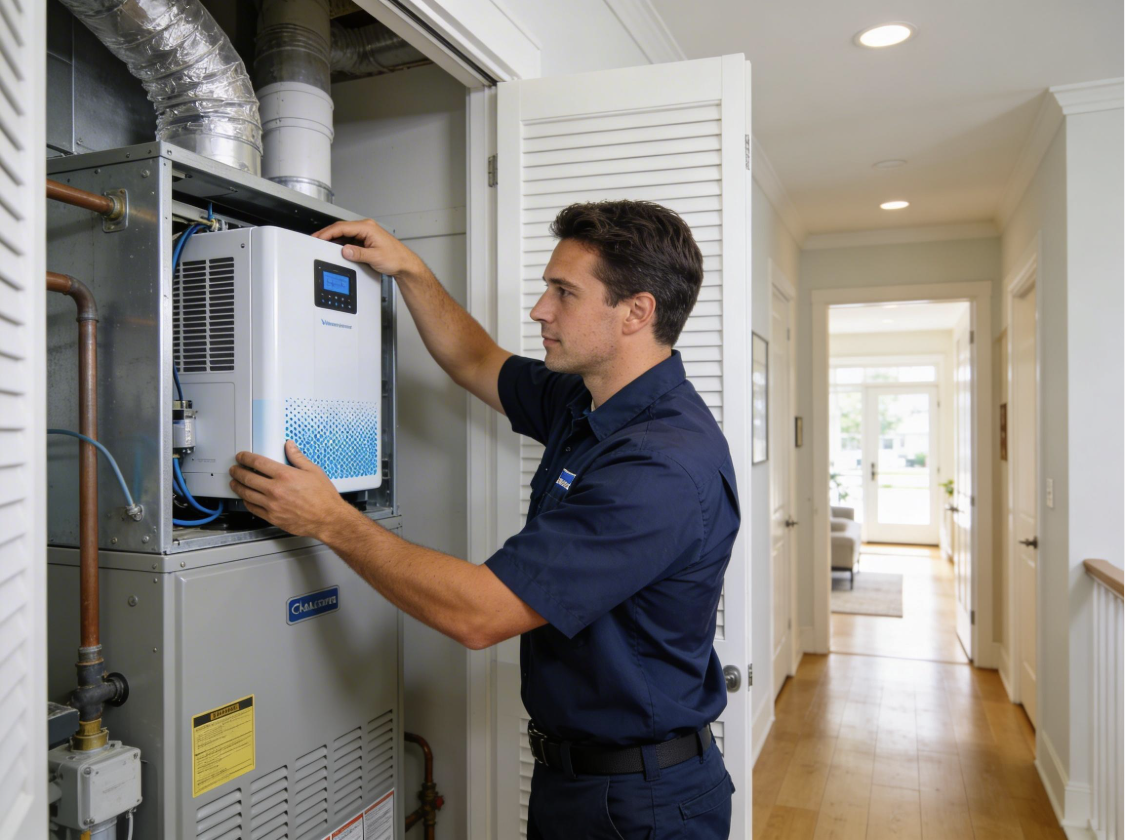
A variable-speed blower motor changes how much air moves through the ductwork. A variable-capacity compressor or heat pump can adjust how much heating or cooling the outdoor equipment produces.
The important thing when buying a system is to ask which component has variable-speed operation, as that can completely change how the system is expected to perform.
Variable-Speed vs. Single-Stage HVAC
The basic difference between these two systems is how much control the system has over the output.
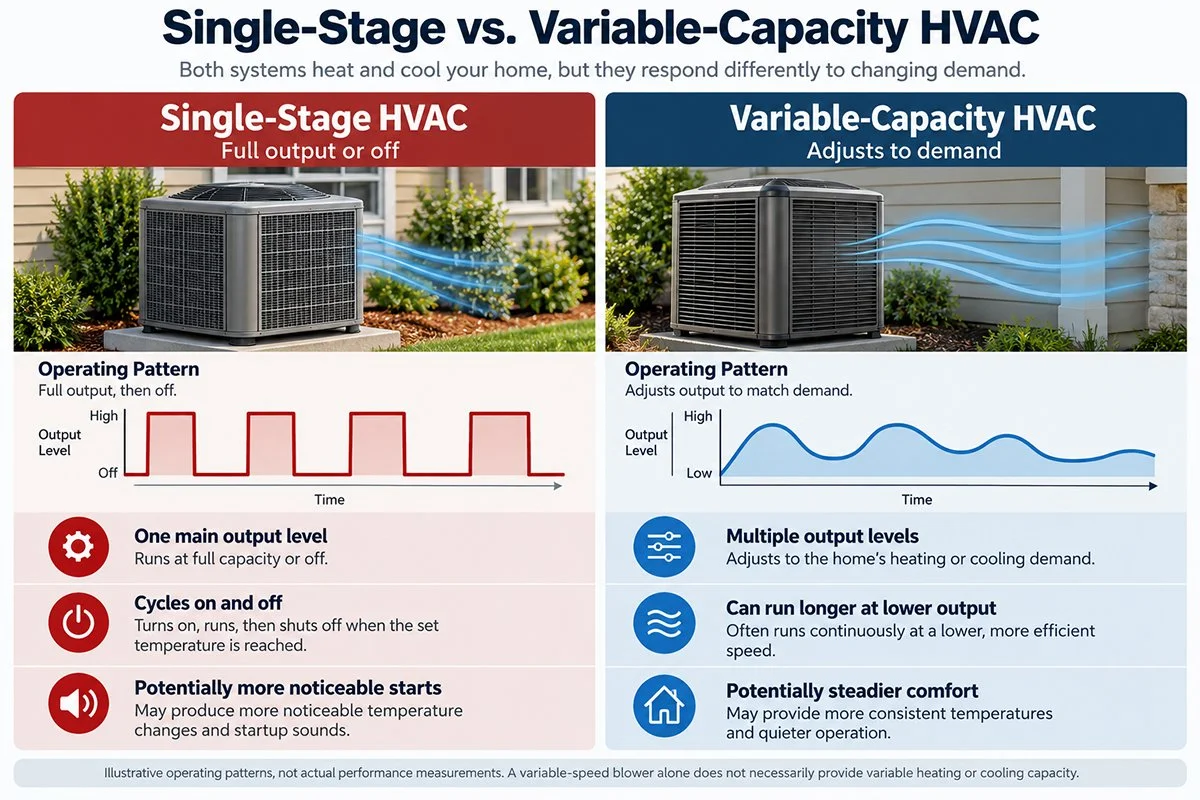
A single-stage system generally operates at one primary heating or cooling level. It’s either running at that level or turned off. If the home needs a small amount of cooling, the system may still run at its full available output until the thermostat is satisfied.
A variable-speed system can run at a lower output for part of the cycle. It may increase its speed if the home needs more heating or cooling, then slow down again as the indoor temperature gets closer to the thermostat setting.
Why Variable-Speed HVAC Can Improve Home Comfort
One of the big benefits of variable-speed HVAC systems is consistency. Rather than allowing temperatures to drift several degrees before turning on at full output, the system is able to make smaller, automatic adjustments throughout the day.
That means fewer dramatic temperature swings. The rooms may feel noticeably less hot or cold between cycles.
Variable-speed equipment can also provide more consistent airflow.
The blower may run at a lower setting for regular operation and increase speed when the home needs more conditioning. Lower airflow can feel less drafty than a single-stage system's strong burst of air.
As for how comfortable it is from room to room, that still depends entirely on the design of your HVAC system, including the ducts, the insulation, the windows, how it's sized, etc.
Why Does a Variable-Speed HVAC System Run Longer?
They run longer, lower-output cycles to maintain a consistent temperature.
Just like the way a car drives at a steady speed to save fuel rather than repeatedly accelerating and braking, a variable-speed HVAC makes smaller adjustments throughout the day and night.
And don’t worry. This doesn’t equate to higher energy use. Energy consumption depends on a number of other variables, from how long it runs to the quality of insulation in your home.
Is Variable-Speed HVAC Quieter?
Variable-speed equipment can be quieter during lower-output operation, since the blower and outdoor equipment usually start operating at lower speeds instead of switching on at full capacity. There’s less of a sudden rush of air that you get with older systems.
How loud your system is can depend on the equipment, how it's installed, the size of the ductwork, the mounting surface, and where it's located in the house. If the outdoor unit is poorly supported, it can vibrate. If the ductwork is undersized, the airflow can be noisy.
So, it's possible that you get a quieter system, but a new equipment label alone won't guarantee quieter operation.
Can Variable-Speed HVAC Improve Efficiency?
Variable-speed equipment can match its output more closely to the home’s current demand, which may reduce the need for repeated full-output starts and help the system operate more controllably.
Still, there’s no universal energy-savings guarantee. Even if you have a high-efficiency system, it won’t do you much good if it’s poorly installed or oversized.
Does Variable-Speed HVAC Help With Indoor Humidity?
In the hotter months, longer cycles can give the indoor coil more time to remove moisture from the air, as long as the system is sized properly and the equipment is in good condition. If the system is too large, it may still run in short cycles and remove less moisture. Even if you have a variable-speed system, it can't make up for every sizing or ductwork issue.
Is a Variable-Speed HVAC System Right for Your Home?
Depending on the equipment and how it's installed, potential benefits may include:
Steadier temperatures
Quieter operation
More controlled airflow
Better control over how the system responds to changing conditions
But you also have to consider your existing equipment and ductwork. Replacing a single component might not give you the results you expect if the rest of the system can't support it. The best way to know whether the investment is worth it is to get a professional evaluation.
Choosing the Right HVAC System for Your Home
A variable-speed furnace or heat pump may improve your home's comfort, but the right choice depends on your existing equipment, ductwork, budget, and heating and cooling needs. Think of variable-speed operation as a feature, not a guarantee.
Miller’s Heating & Air helps homeowners in Vancouver, WA, and Clark County compare equipment based on all of the above factors. Our goal is to help you choose a system that works for your home.