How HVAC Technicians Diagnose Low Airflow
Weak airflow from your vents doesn't always mean you have a dirty filter. While a clogged filter is one possible cause, airflow also depends on several connected parts of your HVAC system, including the blower, indoor coil, ductwork, and controls.
If there's a problem in any of these areas, it can affect how the system heats or cools your home.
That's why it's so important to get proper HVAC airflow testing from a technician.
What Does Low HVAC Airflow Feel Like?
Many homeowners describe low HVAC airflow in one of a few ways:
Some rooms heat or cool differently from the rest of the home
The system runs longer before reaching the thermostat setting
The temperature keeps drifting away from the set point
Airflow changes noticeably from one vent to another
Certain registers make more noise than usual
The system sounds like it is working hard without moving much air
Just because you have a symptom doesn’t mean there’s a specific cause attached to it. For example, if you’re getting weak airflow from vents, it could be because you have a closed register, a crushed section of ductwork, a design problem, or some restriction farther back in the system.
A technician uses the symptoms as a starting point before checking the equipment and the airflow path.
HVAC Technicians Start With the Simple Airflow Problems
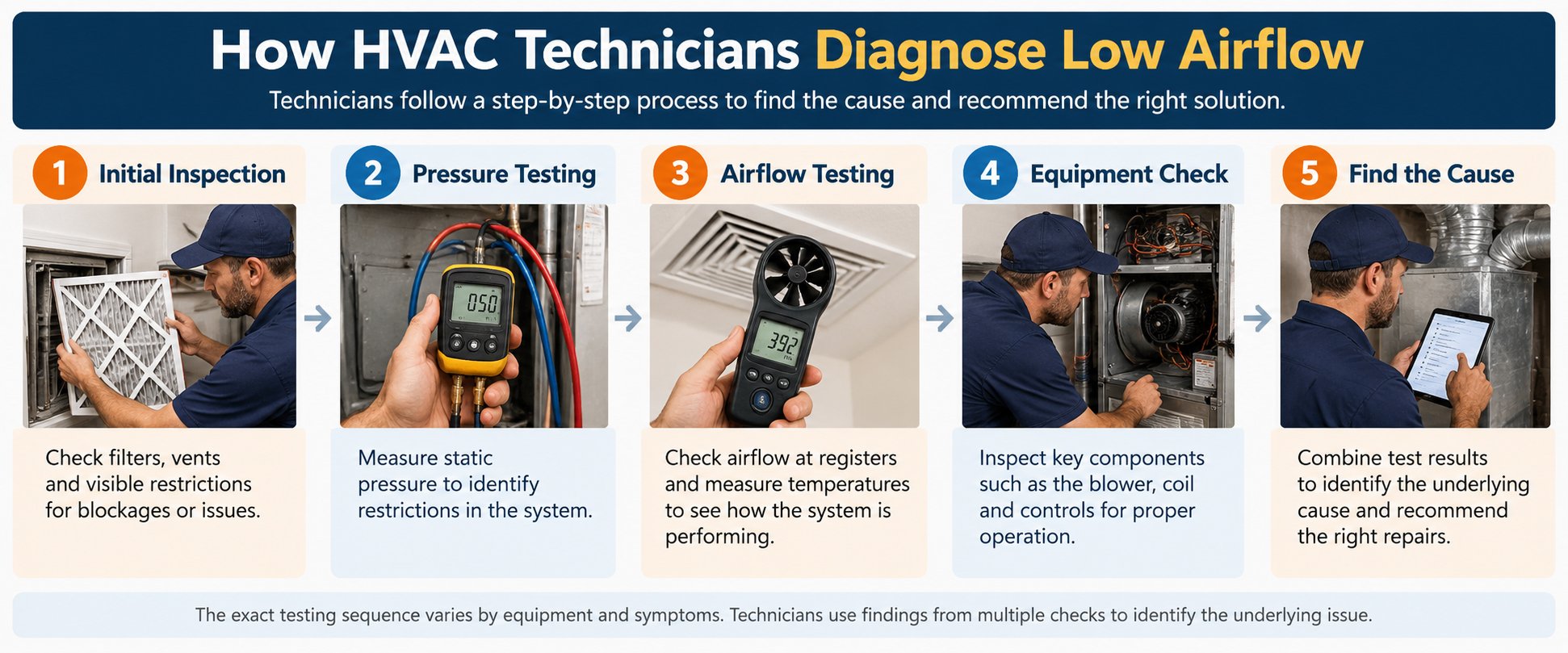
During the initial inspection, a technician will look for common airflow restrictions, such as a dirty filter, blocked registers, or an incorrectly installed filter. Even a new filter can restrict airflow if it's the wrong size, installed incorrectly, or has a resistance level that's too high for the system.
From there, the technician may look at supply registers and return grilles to make sure they are not being blocked by any household items. The technician may also inspect accessible ductwork for obvious damage, disconnected sections, or restrictions.
The blower is another big checkpoint. The technician will typically listen for unusual sounds and inspect the wheel for heavy dust buildup. If you have a dirty wheel, it won’t be able to move air as effectively as a clean one.
If they aren't able to solve anything with these basic checks, they might need to measure the system.
How Technicians Measure HVAC Airflow
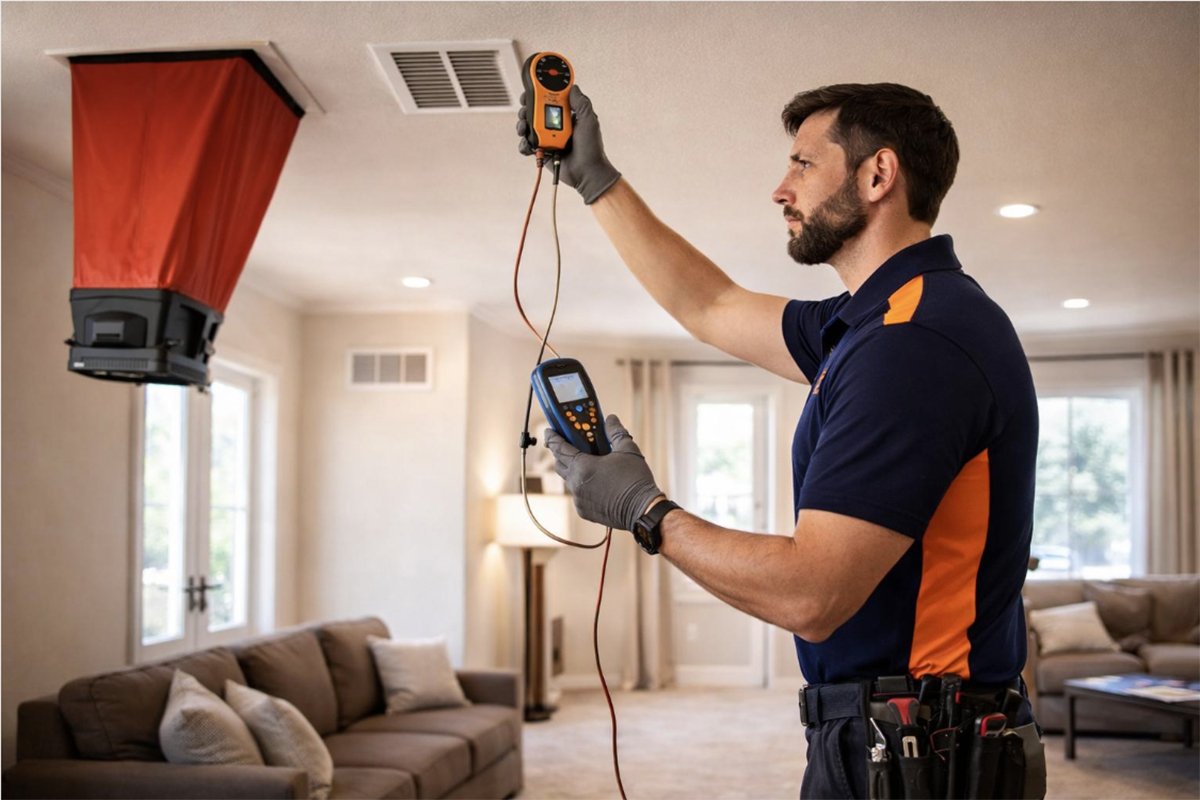
During HVAC airflow testing, a technician may measure airflow at selected registers with specialized tools. Depending on the system and the reason for the visit, the technician may also check the total airflow moving through the equipment or compare readings between rooms.
The technician might also look at temperature measurements, comparing return-air and supply-air temperatures to see how the system is conditioning the air.
These findings are compared with the equipment’s requirements to separate equipment problems from ductwork or distribution problems.
Airflow measurements and temperature readings provide different information. Temperature differences alone don't tell a technician exactly how much air is moving through the system, so several measurements may be needed to identify the cause.
What Is HVAC Static Pressure?
HVAC static pressure is the pressure within the duct system that technicians measure to help evaluate airflow resistance.
High total external static pressure can indicate that the blower is working against more resistance than the equipment is designed to handle. Think of it as the effort the blower needs to push air through the filter, coil, ducts, grilles, and registers.
If a filter has too much resistance, it can raise static pressure. So can a dirty indoor coil, undersized ductwork, closed dampers, restrictive registers, or a restricted return-air path.
Technicians measure static pressure with a specialized instrument connected to the ductwork. The reading can show whether the system is operating under more resistance than it was designed to handle.
Unusually high static pressure deserves investigation.
Checking the Blower and Indoor Equipment
If the initial checks don’t explain the HVAC airflow problems you’re having, the technician may inspect the indoor equipment more closely.
That might include checking whether the blower is operating at the correct speed and whether the motor is receiving the appropriate control signal. They might also check to see if there’s dirt on the coil that’s restricting airflow or if the coil is frozen.
Depending on the findings, the technician may also check filter specifications, blower settings, motor operation, and relevant electrical or control components.
Checking the Ductwork for Airflow Problems
A ductwork inspection helps technicians identify restrictions, leaks, and other problems that may prevent enough conditioned air from reaching certain rooms.
During this process, technicians typically look for a number of things, including:
Collapsed flex duct
Sharp bends
Disconnected sections
Damaged or poorly insulated ductwork
Blocked dampers
Restrictions near the supply plenum
Leaks
Undersized or poorly designed ductwork
The supply ducts carry conditioned air to each room. By inspecting accessible sections and comparing airflow measurements, a technician can help determine whether a restriction is near the equipment or farther along the ductwork.
Could the Problem Be on the Return-Air Side?
Sometimes.
The return side brings household air back to the indoor equipment. A blocked return grille, undersized return duct, or restricted return-air pathway can limit how much air reaches the blower. Closed interior doors can also affect airflow in homes without adequate return-air pathways.
These problems can affect the whole system. A technician has to look for obvious blockages and measure system pressure to determine whether return airflow is part of the issue.
For a closer look at return-air concerns, check out our latest blog: Can Your HVAC System Get Enough Return Air? (link when it's published)
Why Fixing the Cause Matters More Than Treating the Symptom
If a dirty coil, restrictive filter, damaged ductwork, or inadequate return-air pathway is causing low airflow, the underlying problem needs to be addressed. Simply increasing blower speed isn't always the solution. Depending on the system, it may increase noise or static pressure without correcting the restriction. A technician can determine whether an airflow adjustment, equipment repair, or ductwork improvement is needed.
Match the repairs to the technician’s findings.
Have Your HVAC Airflow Professionally Checked
If you’re noticing weak airflow, uneven temperatures from room to room, unusually long system operation, or unusual noises, Miller’s Heating & Air can inspect the system and measure what is happening.
We serve homeowners throughout Vancouver, WA, and Clark County, and can help identify whether the issue is coming from the equipment, ductwork, filter, return path, or another part of the airflow system.