6 Signs Your HVAC System Needs a Tune-Up
Most of the HVAC problems we see start small.
Maybe the back bedroom never cools down as quickly as the rest of the house. Maybe the outdoor unit is a little louder than it was last summer. Maybe the AC still works, but it runs so long that you have to constantly check the thermostat to see if it’s actually doing anything.
These things are often the first signs your HVAC needs a tune-up this summer.
Now, they don’t necessarily mean you’ll need a major repair, but they can be bad for your system’s efficiency, airflow, or consistency.
If you’ve been looking for HVAC service near me or comparing HVAC tune-up specials before summer hits, here’s what to watch for.
1. Uneven Cooling Between Rooms
Uneven cooling is one of the most common complaints homeowners notice before they call for HVAC service here in Vancouver, WA. It’s often an issue in upstairs bedrooms, west-facing rooms that get afternoon sun, or additions that were tied into older ductwork.
Sometimes the AC itself is fine. The problem may come from weak airflow, a dirty evaporator coil, leaky ductwork in the attic or crawlspace, or return vents that don’t pull enough warm air back to the system.
An uneven cooling HVAC issue can also get worse when doors stay closed for long periods. If a bedroom has a supply vent but no good return path, cool air enters the room but warm air doesn’t circulate out well.
With a tune-up, you can narrow down whether the problem is coming from the equipment, the airflow, or the duct layout.
2. Rising Energy Bills
A higher summer electric bill is normal, especially if you live somewhere hot. What’s not normal is a bill that climbs while the system seems to be doing less.
A rising energy bill related to your AC system usually means the equipment has to work harder to get the same result.
It might be that you have dirty condenser coils. Those are the coils in the outdoor unit, and when they’re covered in pollen, cottonwood fluff, dust, or yard debris, the system has a harder time dumping heat outside.
The same problem can come from dirty indoor coils, poor airflow, weak capacitors, aging blower motors, or refrigerant issues.
The tricky part is that the house may still cool. It just takes longer, costs more, and puts more strain on the system.
3. Strange Noises
Some HVAC noise is normal, like the blower starting or the outdoor fan kicking on.
Other noises, not so much.
If you hear rattling, it may be a loose panel or debris inside the outdoor unit. A high-pitched squeal may point to motor bearing wear. Buzzing near the outdoor unit can happen when an electrical component, like a contactor or capacitor, starts struggling.
If you hear any of these noises, it’s a good idea to schedule HVAC repair right away.
This is usually when homeowners start searching for hvac repair near me to get the issue checked before it gets worse.
4. Weak Airflow
Even if the AC is technically cooling, the temperature in the house might not feel great if you’re getting weak airflow from the vents.
Typically, the issue is a clogged filter, and it’s always worth checking first. But airflow can get weaker for a number of other reasons as well:
Dust on the blower
A dirty evaporator coil
Loose or collapsed ducts
Blocked return vents
Weak airflow also makes the system harder to diagnose from the thermostat alone. The AC may run for a long time, but not enough cool air reaches the rooms that need it.
During a tune-up, a technician can check the filter to make sure it’s in good condition, see how the blower is performing, check if the coils are clean, and look at how the temperature is split across the system
5. Longer Cooling Cycles
An AC system will run longer during hot weather. But when the system runs much longer than normal under similar conditions, that can be a major issue.
The problem can stem from dirty coils, low refrigerant, poor airflow, thermostat problems, or an aging compressor. They can also happen when duct leakage sends cooled air into an attic or crawlspace instead of the living area.
The house might eventually cool down, which is why this issue doesn’t always seem that urgent. But the system pays for that delay. Extra runtime = more wear and higher energy use.
6. Musty or Unusual Odors
A slight dusty smell the first time you turn on the AC in spring is normal. Dust settles during the off-season, then airflow pushes it through the system.
However, if it’s a musty smell, that usually means there’s moisture somewhere in the system. Some common reasons might be:
A dirty evaporator coil
A clogged condensate drain line
Standing water in the drain pan.
Since Vancouver has a damp climate, moisture problems aren’t rare.
If there’s an electrical smell, that needs even faster attention. The same thing goes for hot plastic, burning wiring, or anything that seems electrical. If that’s the case, shut the system off and schedule service.
Why a Tune-Up Helps

A good tune-up gives the system a reset before summer demand hits.
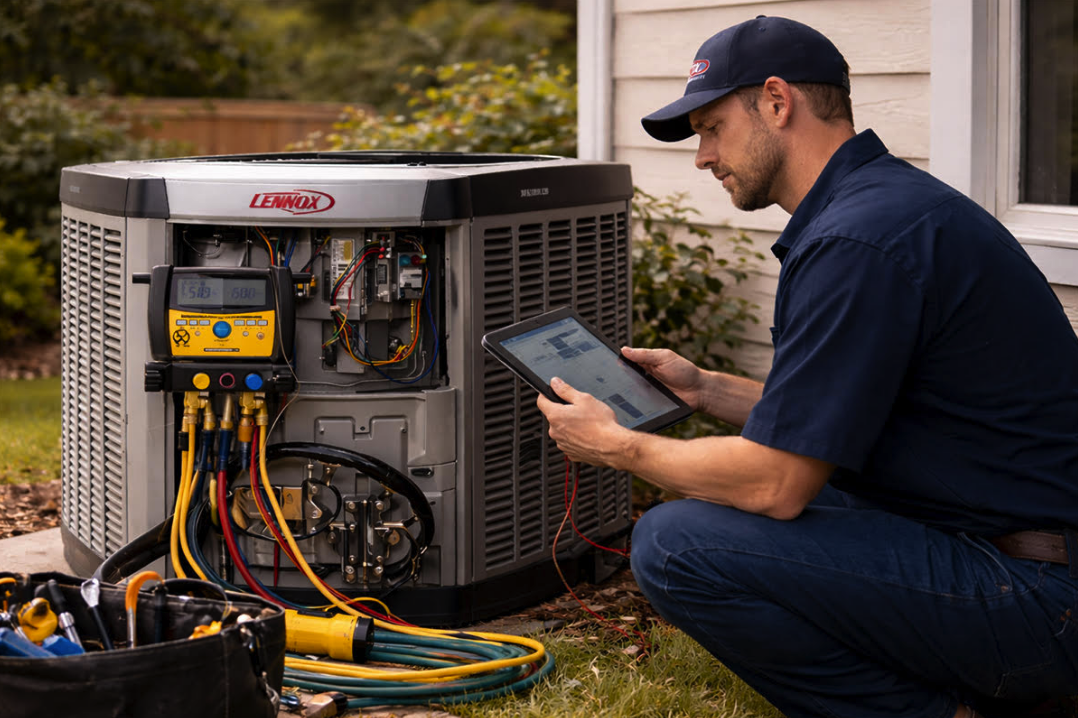
The technician will check your electrical components, test your capacitors, inspect the outdoor unit, look at coil condition, check your airflow, verify that your thermostat is operating properly, and watch how the system performs during a cooling cycle. If something is starting to wear out, you usually want to find it in May or June, not during the first week everyone in town is calling for service.
A tune-up doesn’t guarantee nothing will ever break, but it can lower the odds that a small, fixable issue becomes a mid-summer repair.
Schedule Before Peak Summer Demand
If your AC has weak airflow, uneven cooling, odd smells, strange noises, longer cycles, or higher bills, don’t wait to call a technician.
Schedule service before peak summer demand, while appointment times are easier to get.