
Why Your Home Feels Warm After Sunset
There are a few reasons that a house stays hot after sunset. Most of them have less to do with the air outside at that exact moment and more to do with the heat your home absorbed all day.
Roofing, attic spaces, walls, windows, ductwork, insulation, and airflow all play a part in the internal temperature of our houses.
Even if your AC is running, the house can still release stored heat into the living space. It can also cause uneven cooling upstairs or in an attic.
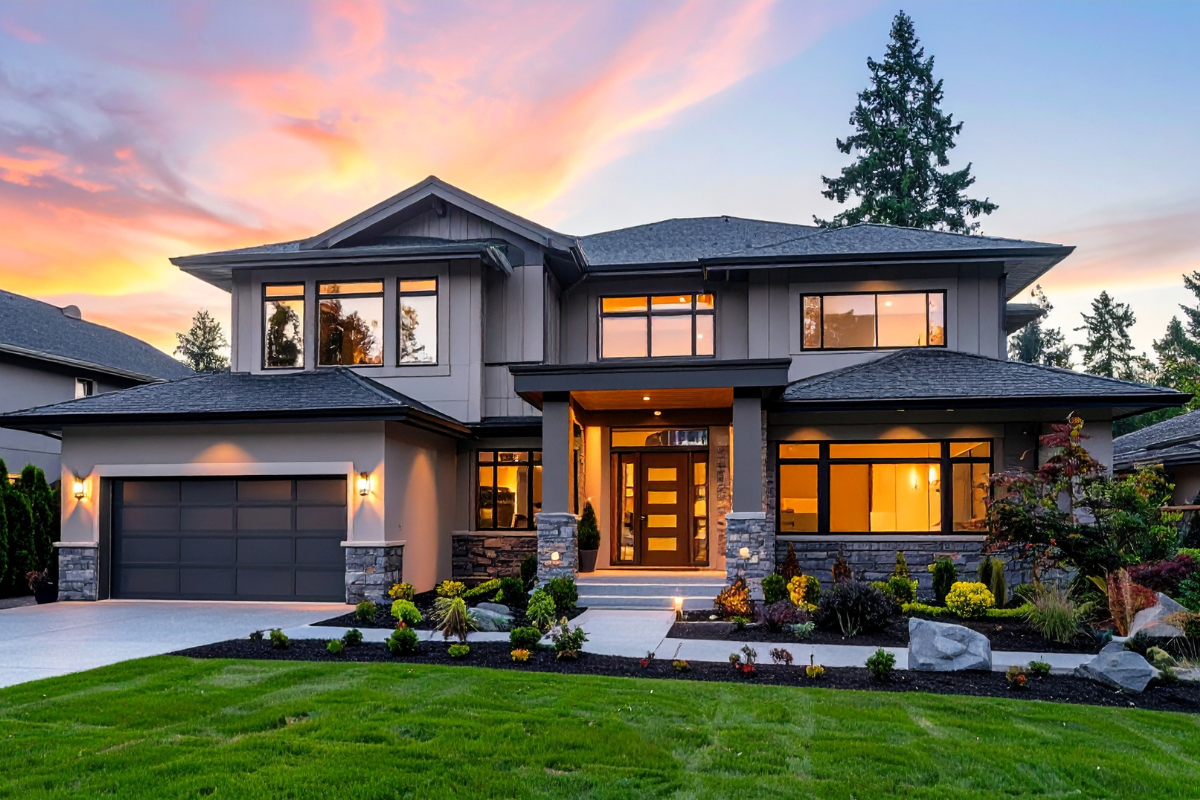
Why Homes Hold Heat After Sunset
Houses don’t cool down instantly because they don’t heat up instantly either.
All afternoon, the roof absorbs heat. Exterior walls also take on heat. Attic air gets hotter. Sun-facing rooms collect heat through windows, especially on the west side of the house when the late-day sun is at its strongest.
After sunset, some of that heat continues to move inward.
That’s why your home feels warm at night, even when the outdoor air finally starts to cool.
Attic Heat Retention
On a warm day, attic temperatures can climb far above the outdoor temperature. If ventilation is weak, that hot air sits there for hours. If insulation has gaps or wasn’t installed evenly, heat transfers down into the rooms below.
That’s called attic heat retention.
Upstairs rooms feel hotter first because they’re closest to the heat source. Even after sunset, the attic can keep radiating heat into ceilings and walls. The AC has to fight that stored heat while also trying to cool the living space.
Poor attic ventilation can make this worse. So can recessed lights, gaps around attic hatches, and sections where insulation has been moved or compressed over time. It doesn’t take a large opening to let a lot of heat enter the home.
This is especially why upstairs homes are so hot at night in older buildings.
Airflow Imbalance in the Evening
The way air moves is the other half of the problem.
An airflow imbalance in the house can become much more noticeable at night because the rooms that gained the most heat during the day need the most time to cool after sunset.
Upstairs duct runs are often longer, which means cooled air has farther to travel, and if ducts leak or lose pressure along the way, less air reaches the rooms that need it most.
We also have to look at return airflow. If a bedroom has a supply vent but poor return airflow, cool air may enter the room without warm air leaving. Close the bedroom door, and the problem gets worse without circulation.
People often think the issue is their AC when it’s actually an air distribution problem. This is one of the most common causes of uneven cooling between floors.
Why Your AC May Still Run at Night
If your AC runs all night but the house stays warm, the system is probably trying to remove heat that entered earlier in the day.
You may have your thermostat in a cooler hallway or downstairs room. Meanwhile, your upstairs bedroom may still feel several degrees warmer. That’s because AC cycles are based on the thermostat location, not the hottest room in the house.
In other cases, your system might run continuously because the heat load never really drops.
A long nighttime cooling cycle isn’t always a sign the AC is failing, but it’s worth paying attention to see if there’s a pattern. If the system runs late into the night and still can’t bring the home to the set temperature, something in the home or HVAC system needs a closer look.
Windows and Indoor Heat Gain
Windows can turn certain rooms into heat traps. This is especially true with west-facing windows, as they take on late afternoon sun. By evening, those rooms may already be several degrees warmer than the rest of the house. Older single-pane windows are a common source of heat gain, which is why many homeowners eventually choose to replace them.
Blinds, curtains, and exterior shading can help.
Of course, that doesn’t mean you need to live in a cave all summer. It just means that you should close the shades before the room heats up.
How Insulation Affects Nighttime Comfort
During summer, your insulation slows heat transfer from the attic, walls, and crawlspace into the living area. When you have thin or old insulation or spots where it’s missing, it allows heat to move through your home more easily.
The frustrating part is that insulation problems can make it seem like you have an issue with your AC. But if your vents are still blowing cool air and it doesn’t seem like it’s doing the thermostat any good, it’s not a good idea to be quick to judge.
We typically see this issue in older homes, but it can just as easily appear in homes that have had attic renovations where the insulation was never put back correctly.
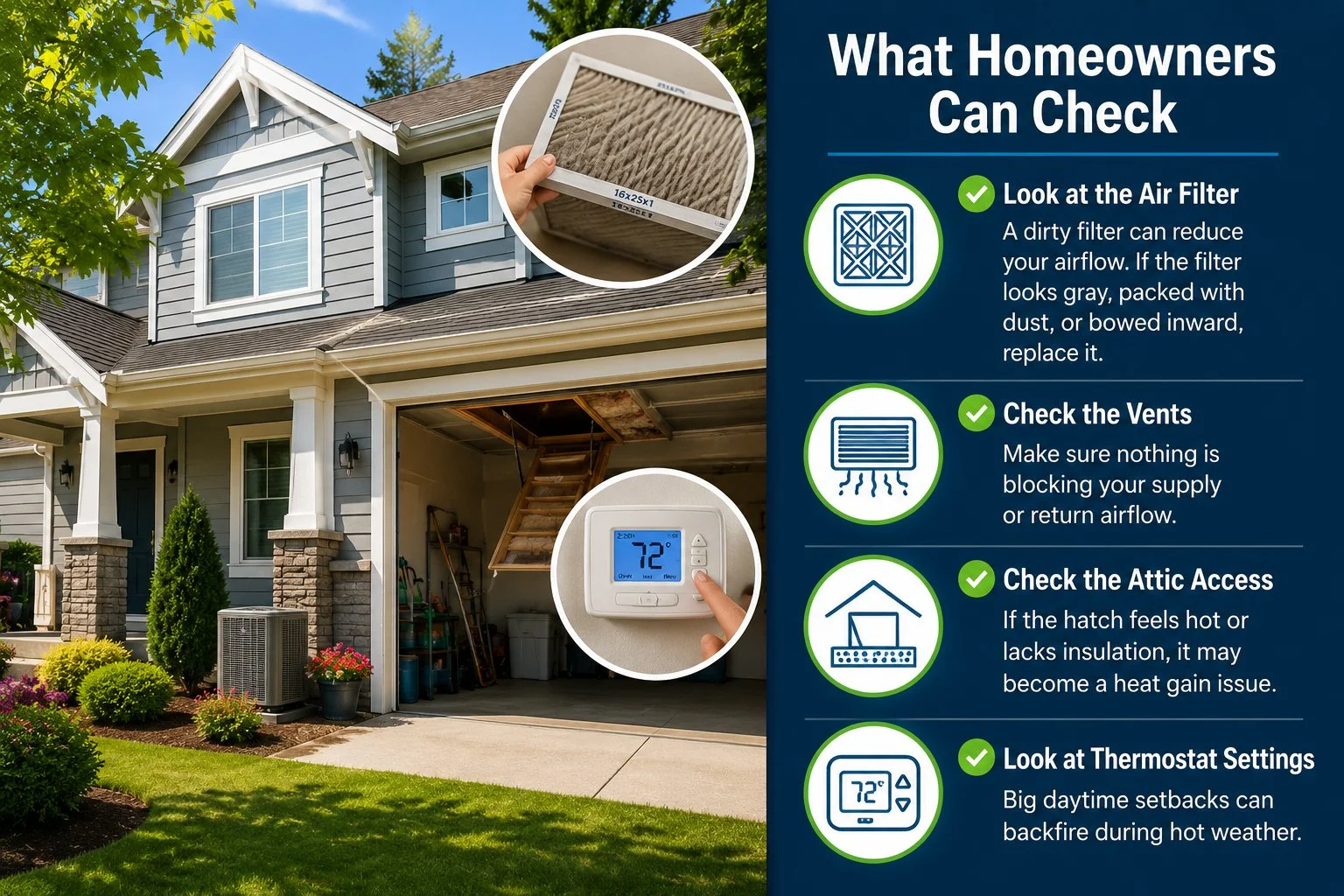
What Homeowners Can Check
Start with simple checks before assuming the system needs major repair:
Look at the air filter: A dirty filter can reduce your airflow. If the filter looks gray, packed with dust, or bowed inward, replace it.
Check the vents: Make sure nothing is blocking your supply or return airflow.
Check the attic access if possible: If the hatch feels hot or lacks insulation, it may become a heat gain issue.
Look at thermostat settings: Big daytime setbacks can backfire during hot weather.
When to Call an HVAC Professional
Call a professional if you’re noticing that the same rooms are staying hot night after night, especially if you’ve gone through the basic filter and vent checks and they aren’t helping. The same goes if your AC is running all night, but your house isn’t cooling at all.
A technician can measure supply and return airflow, inspect ductwork, evaluate attic-related heat gain, and identify why certain rooms stay warmer than others after sunset.