How to Keep Your AC Running Efficiently
Small habits can change how your AC performs.
Of course, you’re not going to cut your bill in half by closing the blinds or changing one filter. But when you add a few smart habits up, your system has an easier time cooling the house, you live more comfortably, and your monthly energy use usually drops.
If you want to improve your AC efficiency before summer hits hard, here’s a helpful little guide!
1. Replace Filters Regularly
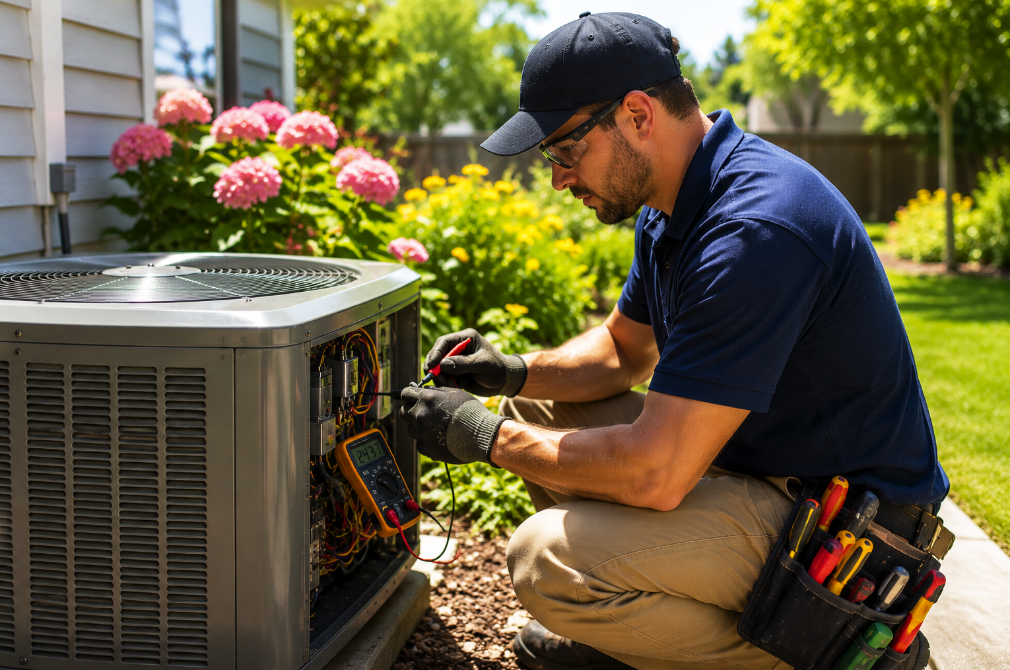
A dirty filter makes it harder for the blower to pull air through the system. Less airflow across the indoor coil means rooms cool more slowly, and the AC has to run longer to achieve the same result.
For most homes, it’s a good idea to check the filter once a month during the cooling season. If you have pets, allergies, nearby construction, or a dusty crawlspace, you may need to replace it more often.
This is one of the simplest AC maintenance tips homeowners can follow, and it’s also one of the easiest to ignore.
2. Keep the Outdoor Unit Clear
Your outdoor condenser needs room to breathe.
That unit releases heat from inside your home. When leaves, grass clippings, weeds, or shrubs crowd it, heat has a harder time leaving the system. The AC still runs, but it works harder and cools less efficiently.
This is one reason homeowners feel like their AC is not keeping up with heat during summer afternoons.
Walk around the unit every couple of weeks in summer. Clear debris from the sides. Trim plants back. Make sure nothing blocks the top.
After a windy day, check it again. A pile of leaves pressed against the coil can undo a lot of otherwise good maintenance.
If the coil itself looks dirty or matted with debris, that’s a good time to schedule air conditioning service in Vancouver, WA.
3. Use Smart Thermostat Settings
A lot of people think lowering the thermostat to 65 will cool the house faster.
It doesn’t.
Your AC cools at the same rate either way. A lower setting just keeps the system running longer.
A steadier thermostat strategy usually works better. Set a temperature you can actually live with, then avoid big swings during the hottest part of the day.
If you use a smart thermostat, program small adjustments so that you don’t force the AC to work hard to regain its cool during peak heat.
This is one of the easiest ways to lower AC energy use without touching the actual equipment.
4. Seal Air Leaks in the Home
Sometimes the AC is doing its job, but the house leaks cool air faster than the system can replace it.
Gaps around doors, older windows, attic access panels, and poorly sealed ductwork all affect cooling performance. In older Vancouver homes, attic heat can also push down into living spaces during long summer afternoons.
You don’t need to overhaul the whole house at once. Weatherstripping a leaky door, sealing obvious gaps, and checking attic insulation can help the AC hold temperature longer.
If one room always warms up faster than the others, don’t assume the AC is the only problem. The house may be letting heat in faster than the system can remove it.
5. Use Fans and Shade Strategically
Ceiling fans won’t lower the temperature, but they can make you feel cooler by moving air.
If you can feel comfortable with the thermostat set a couple degrees higher, your AC gets a break. Just turn fans off when you leave the room, since they cool people, not empty spaces.
Shade helps too. Close blinds or curtains on south- and west-facing windows during the hottest part of the day. Those rooms take on a lot of heat in the afternoon, and once they warm up, the AC has to work longer to recover.
Small changes like this help keep AC running efficiently without sacrificing comfort.
6. Schedule Professional Maintenance
Homeowner habits help, but they can’t replace a real tune-up. Rising energy bills from your AC system are often one of the earliest signs your equipment is losing efficiency.
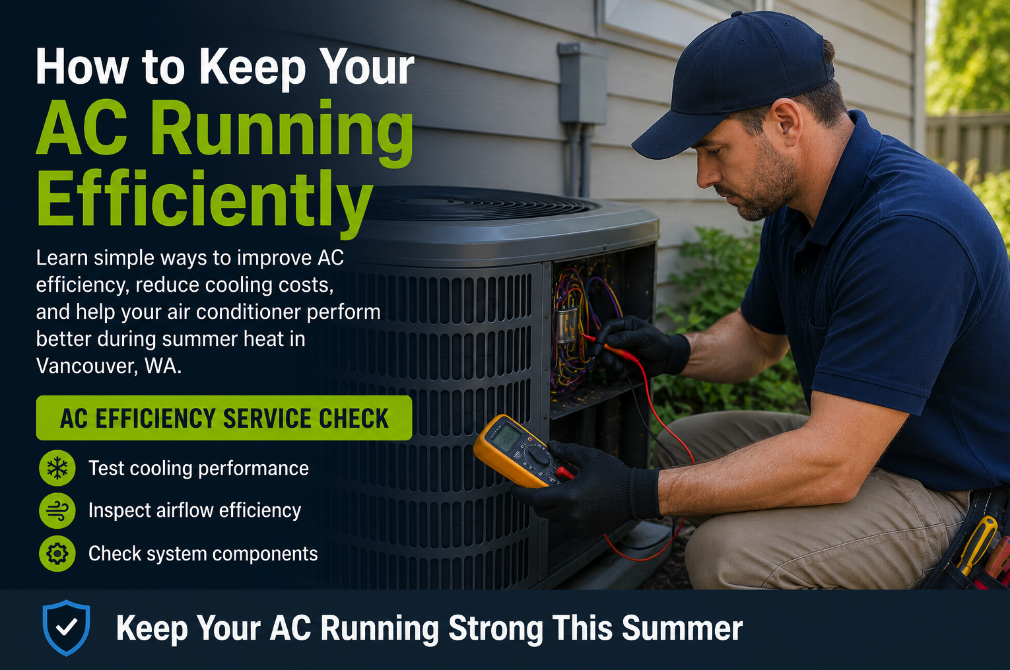
During maintenance, a technician can clean coils, test capacitors, check refrigerant performance, inspect electrical components, measure airflow, and confirm the thermostat is reading correctly.
You’ll be able to catch problems that aren’t as easy to see from a quick look at the vent.
It’s important to get professional ongoing maintenance, as efficiency losses usually build up over time. Your AC might still run, so you assume it’s fine. Meanwhile, a weak capacitor, dirty coil, or airflow issue adds runtime every day.
If you’re comparing HVAC tune-up specials, spring is usually the best time to book. You get ahead of the first hot stretch, and if the system needs work, you have time to handle it before everyone starts calling.
What Not to Do
Many homeowners wait until they’re searching for “HVAC repair near me” before addressing airflow or cooling issues.
A few mistakes we commonly see homeowners make during summer include:
Don’t keep lowering the thermostat because the house isn’t cooling fast enough. That usually just makes the system run longer.
Don’t ignore new noises. You might think a little buzz, hum, rattle, or squeal is harmless, but they usually point to a part that’s wearing out.
Don’t skip filter changes. Poor airflow causes a ridiculous number of AC problems.
Don’t close a bunch of vents to “push” cool air somewhere else. That can increase pressure in the duct system, worsening airflow problems.
And don’t wait until the first heatwave to search for “HVAC service near me.” By then, appointment times get harder to find.
Keep Your AC Running Strong This Summer
You don’t need any DIY tricks to make your air conditioner run better. Clean filters, clear airflow, the right thermostat settings, shade, and seasonal maintenance all work together.
If your system seems louder, slower, or less consistent than it used to be, schedule HVAC service in Vancouver, WA, before peak heat.