Why Your Furnace Smells Burnt at Startup
You flip the heat on for the first time in months, and suddenly your house smells like something’s burning.
It catches you off guard.
If your furnace smells burnt when turned on, it can sometimes be completely normal. Other times, it signals a real issue.
The key is knowing the difference.
Let’s take a look at what causes that furnace burning smell at startup and when you should stop ignoring it.
That Burnt Smell When You First Turn On the Heat
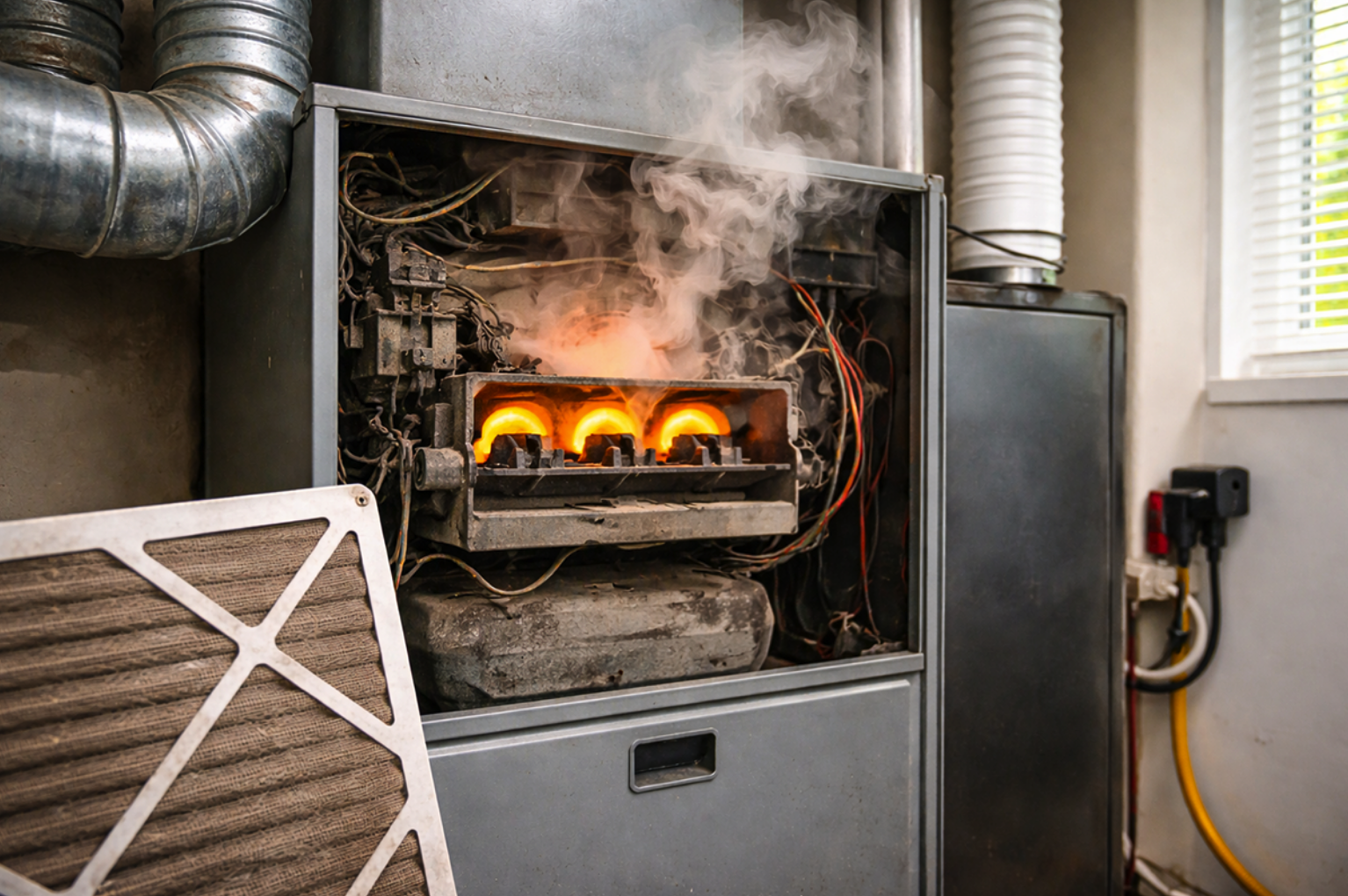
After months of sitting idle, there’s a lot of dust that collects on your furnace. It settles on the heat exchanger, burners, and the other internal components.
When you turn the system on, that dust heats up and burns off.
The result often smells like burning dust. Many homeowners describe it as a dry, dusty, slightly smoky scent that spreads through the house as warm air moves through the vents.
If your heater smells burnt during the first cold evening of the season, it usually comes down to this simple explanation.
It surprises people because it feels dangerous.
Most of the time, it isn’t.
Normal Startup Odors
A furnace startup odor from dust burn-off is common, especially in early fall.
Here’s what a normal smell smells like:
It smells like burning dust
It appears shortly after startup
It fades within 15 to 30 minutes
It doesn’t produce smoke or sparks
Typically, dust burns off, airflow clears it out, and the smell disappears.
If your furnace smells like burning dust and the odor fades quickly, that usually falls under normal operation.
Still, if the smell lingers longer than an hour or keeps returning every time the system runs, something else may be happening.
Burnt Smells That Are Not Normal
Not every “my heater smells burnt” situation is harmless.
An electrical burning smell coming from your furnace carries a sharper, more metallic scent. It may remind you of overheated wiring or hot metal. That smell doesn’t resemble dusty air. It feels harsher and often comes with other warning signs.
A furnace that smells like plastic burning is also concerning. Melting insulation around wiring or overheating components can produce that smell. It often smells sweet and chemical, rather than dusty.
If you notice a burning smell from the vents that’s smoky or chemical and doesn’t go away quickly, treat that seriously.
The smell of a furnace overheating typically pairs with short cycling or system shutdowns. The unit may struggle to move air, and heat builds up internally.
Duration and smell are usually the two factors to use as your guide.
Dusty, brief smell = mostly normal.
Electrical, plastic, or persistent = not normal.
What Causes Problem Odors
Several mechanical issues can produce concerning smells.
An overheating motor can create an electrical burning smell. When blower motors strain due to restricted airflow or age, internal components heat up.
Failing blower components may also produce grinding or squealing sounds along with an odor.
Damaged wiring insulation creates that plastic burning scent. Moisture, wear, or loose connections can damage wiring over time.
Clogged air filters are another common issue. When airflow drops, heat builds inside the system, which can trigger that overheating smell and sometimes cause the system to shut down to protect itself.
Safety Concerns to Watch For
Pay attention to other things beyond smell.
If your breaker trips when the furnace runs, it might suggest an electrical strain. If you see visible smoke, turn the system off immediately.
If the furnace keeps shutting down, something is wrong.
Bottom line: Don’t continue running the system if the smell intensifies or changes in character.
What You Can Check Safely
Start with the simple things.
Replace your air filter if you haven’t done so recently (restricted airflow contributes to overheating and unusual odors)
Make sure supply vents and return vents are open and unobstructed.
Turn the system off if the smell persists longer than 30 to 60 minutes.
Don’t remove panels or attempt electrical repairs yourself.
If the odor resembles melting plastic or hot wiring, leave it alone and schedule service.
When to Call for Service
You should call furnace repair in Vancouver, WA, if:
The smell lasts longer than 30 to 60 minutes
The odor smells electrical or like melting plastic
You see smoke or sparks
Breakers trip repeatedly
The system shuts down during operation
If you notice a strong electrical odor or visible smoke, treat it as urgent. Persistent smells should never become something you “get used to.”
If you’re unsure when to call furnace repair, use our golden rule:
If the odor worries you or changes in intensity, schedule an inspection.
Preventing Future Odor Issues
Seasonal maintenance should mitigate most furnace startup odor concerns.
Annual inspections allow technicians to clean components, inspect wiring, and confirm airflow.
Electrical checks can help find worn insulation or loose connections before they overheat, while airflow checks prevent overheating caused by clogged filters or duct restrictions.
Maintenance lowers the risk of weird, mid-season odors and extends your equipment life. It also gives you peace of mind when you flip the switch for the first time each fall.
Frequently Asked Questions
Is a burning smell normal when I turn on my furnace?
A dusty smell during the first startup is common. It usually fades within 15 to 30 minutes. If you smell an electrical or plastic odor, call for an inspection.
How long should the dusty smell last?
In most cases, less than an hour. If the smell continues beyond that, schedule service.
What does an electrical burning smell mean?
It may indicate overheating wiring, motor strain, or insulation damage. Turn the system off and call a professional.
Should I turn off my furnace if I smell something odd?
If the smell resembles melting plastic, hot wiring, or smoke, turn it off immediately. If it smells dusty and fades quickly, it likely falls within normal startup behavior.
Can a dirty filter cause a burning smell?
Yes. Restricted airflow can cause internal heat buildup, leading to a furnace overheating smell. Replacing the filter often solves the issue.