
Does Closing Vents Save Energy?
Closing a few vents seems like it should make an impact on your house’s internal temperature.
If one room feels too cold, you close the vent. If an upstairs bedroom feels too hot, you close a couple downstairs vents. Then, you hope more cool air gets pushed upstairs.
It makes sense on the surface, especially when you’re trying to fix an uneven house cooling problem without calling anyone.
The issue is that most home HVAC systems don’t work that way.
Why Closing Vents Can Make Comfort Problems Worse
Your ductwork is designed to move a certain amount of air through the system. When you start closing air vents, you’re not usually redirecting air in a clean, controlled way. You may be increasing pressure inside the ducts that reduces airflow through the equipment and creates new problems in other parts of the house.
So while closing vents feels like a quick fix, it can make the system work harder and still leave certain rooms feeling uncomfortable.
How HVAC Airflow Is Designed
A central HVAC system depends on balanced airflow.
The system pushes conditioned air through supply vents and pulls air back through return vents. That supply and return relationship is important. The blower is sized to move a certain amount of air, and the ductwork is designed to carry that air through the house.
When everything is working well, air moves through the equipment, into the rooms, back through the returns, and through the system again.
The issue is when things get out of balance, like one of the returns being too small, or an upstairs duct run being too long.
Those are HVAC airflow problems, and closing vents usually doesn’t solve them. It just changes pressure inside a system that may already be struggling to move air correctly.
What Happens When You Close Vents
When you close vents, air has fewer places to go.
That increases duct system pressure. So instead of flowing freely through the supply ducts and into the rooms, air pushes against closed dampers and grilles. Some of that air may leak out of duct joints, especially if the ductwork is older or already loose.
The blower may move less total air through the HVAC system, reducing airflow throughout the home.
Closing vents doesn’t always send a strong blast of air to the rooms you want to cool. In many systems, it just creates resistance. If you have less airflow, it can impact your system’s cooling performance. Your AC needs enough warm indoor air moving across the evaporator coil.
If airflow drops too much, the evaporator coil can get too cold. As a result, the system may run longer and struggle to cool the home efficiently.Why Some Rooms Get Less Comfortable
Closing vents can make certain rooms feel worse because air isn’t moving the way it should.
A room with a closed vent may get stuffy because it no longer receives enough conditioned air. Rooms farthest from the air handler might stay warm because they already have weaker airflow.
This is especially common in two-story homes.
That kind of air pressure imbalance can also affect doors, returns, and room-to-room circulation.
Increased System Strain
Your blower has to work against whatever resistance exists in the duct system.
When vents are closed, that creates pressure, meaning the blower may work harder to move air, or it may move less air than the system needs. Either way, the equipment is no longer operating under the conditions it was designed for.
Over time, that extra strain can shorten the lifespan of important HVAC components.
For AC systems, low airflow can contribute to:
Coil problems
Longer run times
Compressor strain
For heating systems, restricted airflow can cause the furnace to run hotter than it should.
If you partially adjust a few vents, it won’t ruin your system overnight. But if you close and seal several vents and leave them that way, it can create ongoing strain.
Can Closing Vents Increase Energy Bills?
Yes, closing vents can lead to HVAC efficiency issues.
The equipment in your HVAC system won’t have an easier workload just because vents are closed. It may still run the same amount, or longer, while dealing with higher pressure and reduced airflow.
If the system takes longer to satisfy the thermostat, it’ll have to use more energy to get there. If duct leaks get worse under pressure, some conditioned air may escape into an attic, crawlspace, or wall cavity.
So no, closing vents is not the same as zoning. Real zoning uses dampers, controls, and system design to manage airflow safely. Randomly closing vents is more like forcing the system to work around a blockage.
Better Solutions for Comfort Problems
If some of your rooms are too hot or cold, there are better ways to fix it:
Air balancing: Adjusts how much air reaches different areas of the home using dampers.
Duct improvements: If you have a leaky duct, crushed flex duct, poor insulation, or undersized return air vent, the best fix is at the source.
Thermostat settings and location: In some homes, remote sensors or zoning may help.
The goal is getting the whole system to move air the right way.
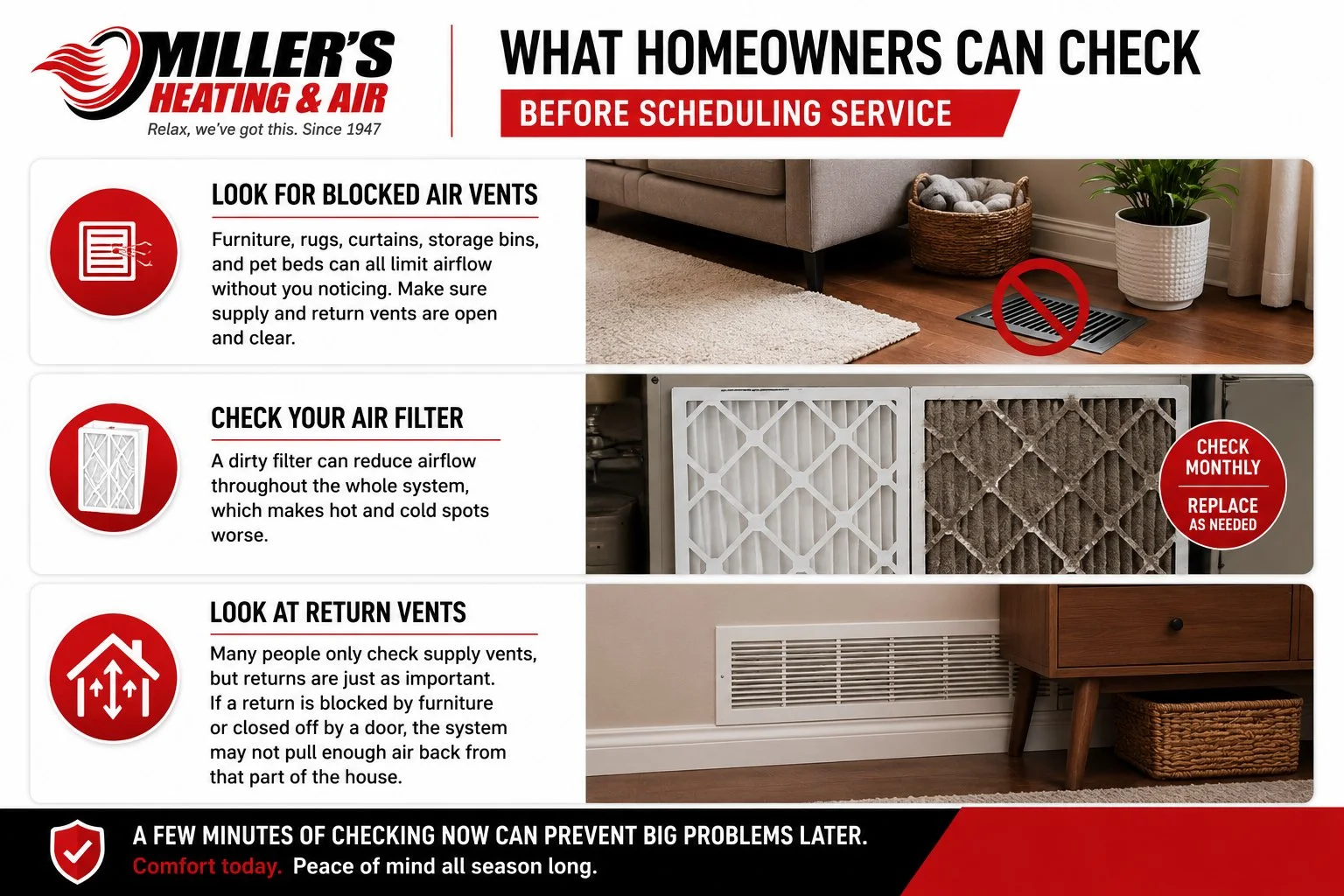
What Homeowners Can Check
Before scheduling service, check a few things:
Look for blocked air vents: Furniture, rugs, curtains, storage bins, and pet beds can all limit airflow without you noticing. Make sure supply and return vents are open and clear.
Check your air filter: A dirty filter can reduce airflow throughout the whole system, which makes hot and cold spots worse.
Look at return vents: Many people only check supply vents, but returns are just as important. If a return is blocked by furniture or closed off by a door, the system may not pull enough air back from that part of the house.
When to Schedule HVAC Service
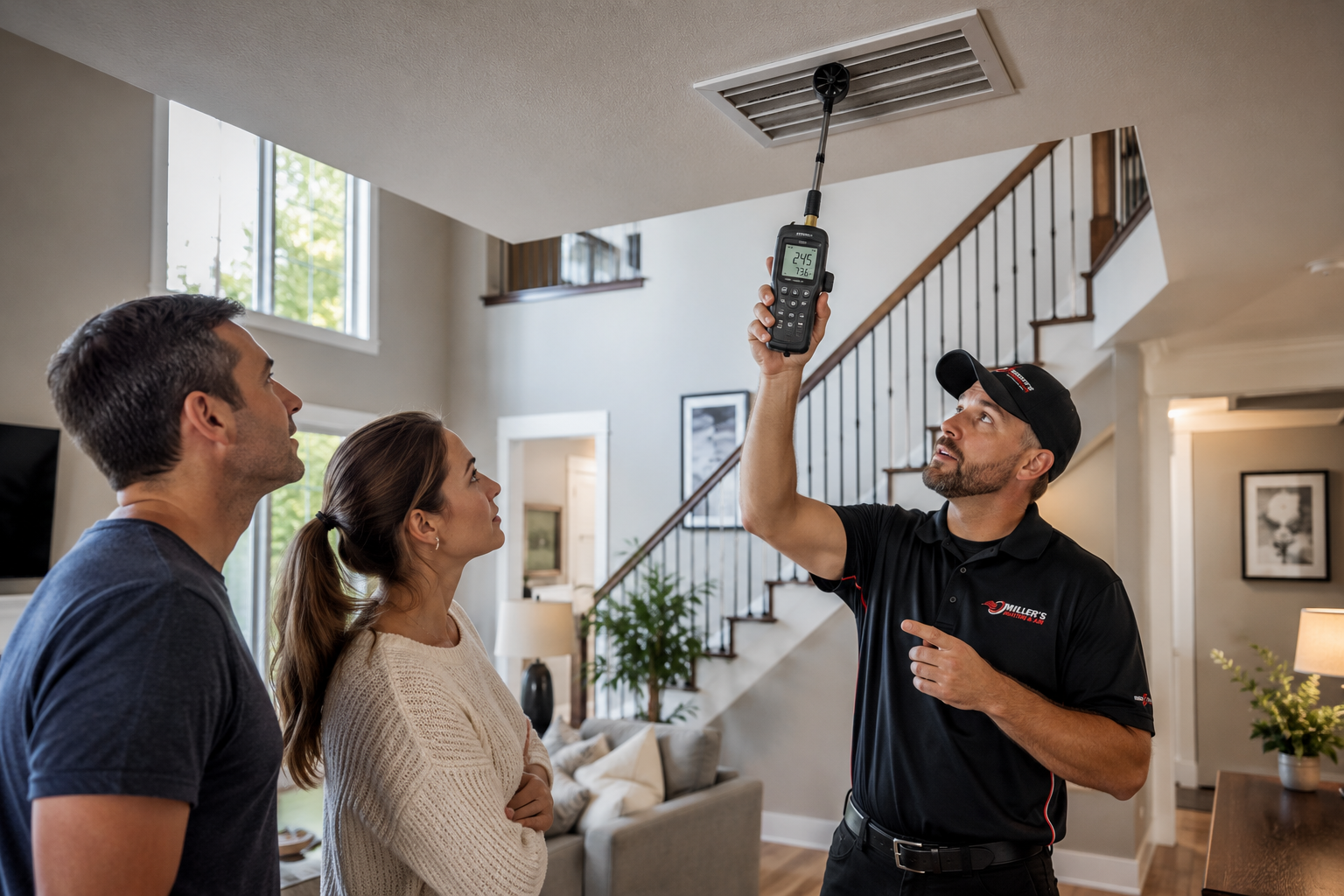
Schedule HVAC service if these problems don’t go away. A technician can measure airflow, inspect ductwork, check static pressure, look at return air, and see whether the equipment is moving the right amount of air.
Persistent airflow issues usually have a cause, whether it’s duct pressure, poor return air, a dirty coil, blower trouble, duct leakage, or some random design issue.
Professional testing gives you answers you can work with.
Solve the Cause, Not the Symptom
If your home has uneven temperatures, weak airflow, or recurring comfort issues, get a professional diagnosis to see where the problem is coming from. Once you know what is actually causing the issue, you can fix it in a way that helps the whole home feel better.