
Why Your Heat Pump Runs Longer When Temperatures Drop
Just because your heat pump runs more in cold weather doesn't mean there’s an issue.
If you're used to a furnace, that might be strange. That’s because a furnace usually delivers hotter air in shorter bursts. A heat pump works differently. It moves heat instead of creating it through combustion, so during colder weather, it often runs longer to keep the house comfortable.
The real question is not just how long the system runs, but whether your home is reaching your desired thermostat setting and the air feels reasonably warm.
If your heat pump is running constantly but still keeps your home warm on a cold day, it may be doing what it was designed to do. But if it’s running nonstop and the house never catches up, that’s a different story.
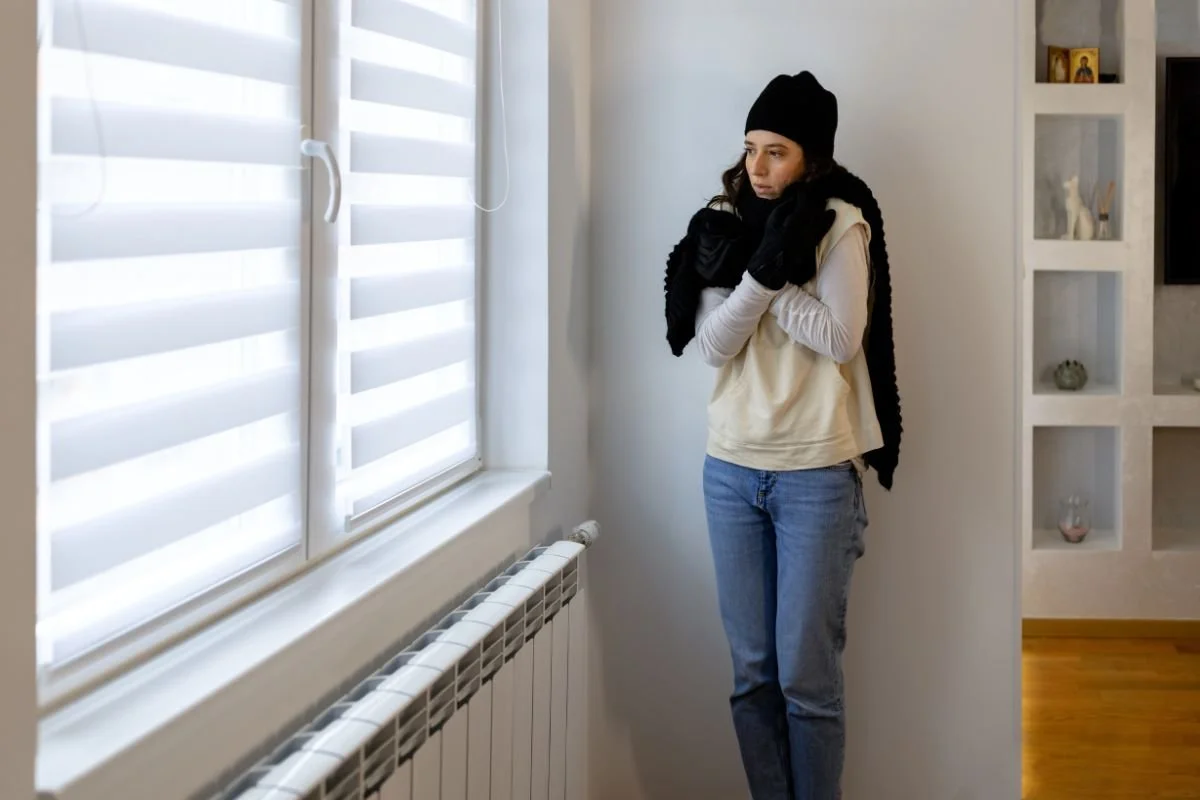
Why Heat Pumps Run Longer in Cold Weather
A heat pump pulls heat from outdoor air and moves it indoors.
Even cold outdoor air contains heat energy. As temperatures drop, however, the heat pump has to work harder to transfer enough of that heat indoors.
At the same time, your home is losing heat faster. Your home also loses heat through windows, walls, attic spaces, crawlspaces, and gaps around the building. The colder it gets outside, the more heating your home needs inside.
That combination leads to longer run times.
A heat pump running in cold weather may stay on for long stretches because it’s trying to maintain a steady temperature rather than blast the house with hot air for a few minutes.
Long Run Times Don't Always Mean Something Is Wrong
Heat pumps are designed to run differently from furnaces. They often produce air that feels warm, not hot. The system may run longer because it’s holding the temperature steady instead of letting the house cool down and then catching up with a stronger blast of heat.
This can actually make for a more comfortable house. Longer cycles move air through the home more consistently, which can reduce big temperature swings.
If you’re worried about there being an issue, ask a few other questions:
Is your home staying near the set temperature?
Are rooms reasonably comfortable?
Is airflow steady?
Does the system sound normal?
If the answer is yes to these questions, it may be totally normal that your heat pump is operating longer in cold weather.
Of course, if it runs all day and the house still feels cold, then you might have to look elsewhere.
What Happens During a Heat Pump Defrost Cycle?
Frost on the outdoor unit can be normal in winter.
As the heat pump pulls heat from outdoor air, moisture can freeze on the outdoor coil. To clear that frost, the system enters a heat pump defrost cycle, during which the unit temporarily changes operation to warm the outdoor coil and melt the frost.
This may make a different sound, and you might see steam rising from the outdoor unit. The fan might also stop briefly.
That’s all normal.
However, if you're seeing heavy ice on the unit that's covering the coils and not defrosting, or ice that comes back quickly once it’s been defrosted, that isn’t normal.
Have it checked.
Why Auxiliary or Backup Heat May Turn On
Auxiliary heat helps when the heat pump needs backup.
You may see “AUX” on the thermostat during very cold weather, during defrost, or when the thermostat setting has been raised several degrees at once. Backup heat gives the system extra help when the heat pump alone cannot recover quickly enough.
A little auxiliary heat use can be normal.
If it's frequently going into AUX mode, that may be cause for concern. The heat pump may not be keeping up because of problems with airflow, a lack of refrigerant, incorrect thermostat settings, or equipment wear.
Auxiliary heat can also use more energy, depending on the setup. So if your bill jumps and the thermostat shows AUX often, schedule heat pump service.
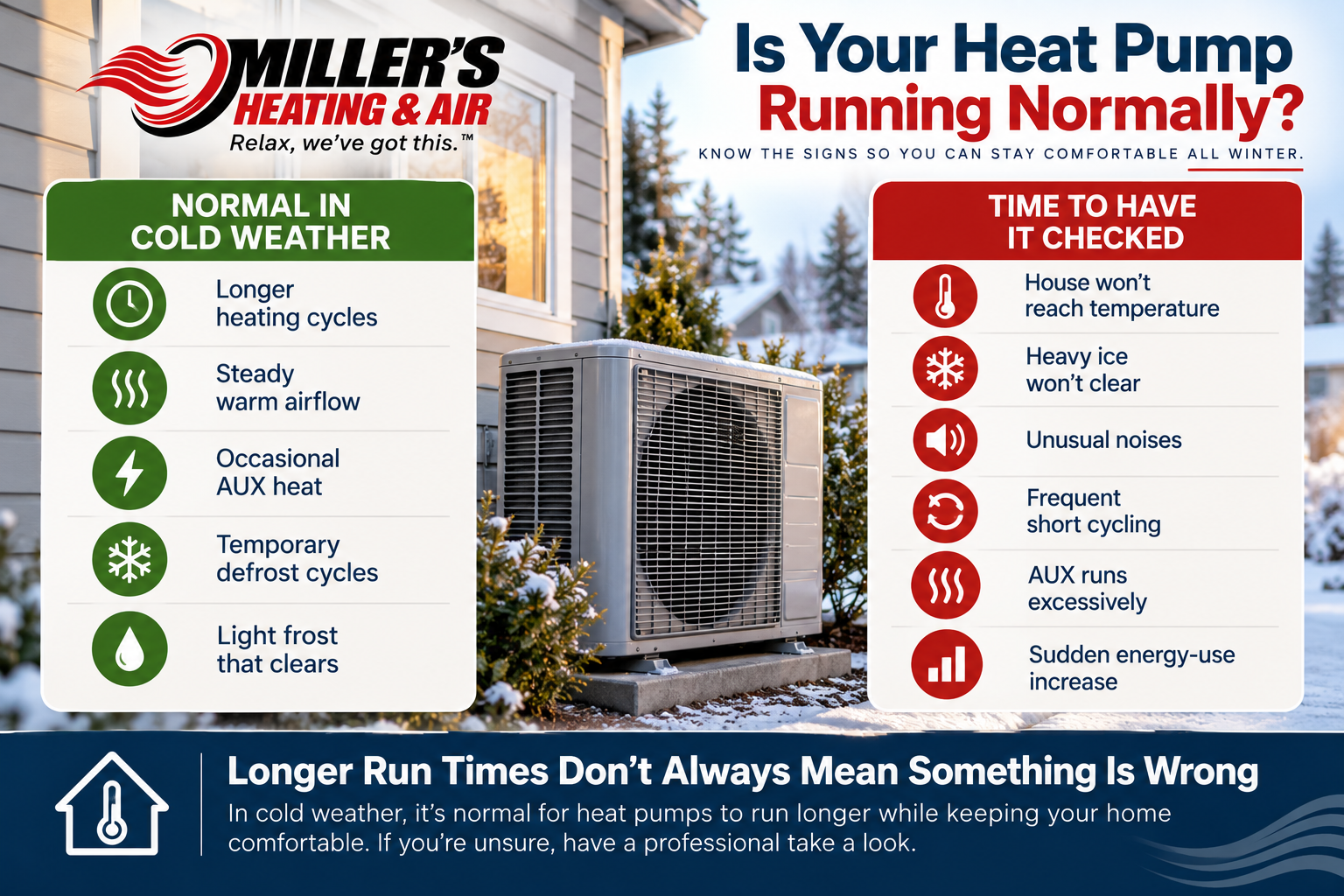
When Longer Run Times Point to a Problem
Longer run times are worth a closer look when there are other warning signs, such as:
The home never reaches the thermostat setting
Air from the vents feels cool for long periods during heating mode
Heavy ice builds up on the outdoor unit
The system short cycles, turning on and off quickly instead of running a normal cycle
New or unusual sounds, such as grinding, buzzing, rattling, or repeated clicking
A sharp rise in your energy bills
AUX or backup heat runs more often than usual
These are all signs to get in touch with your local Vancouver heat pump repair service.
Airflow Can Affect Heat Pump Performance
Airflow problems can have a nasty impact on your heat pump.
A dirty filter can restrict air moving through the indoor unit. Blocked return vents can keep the system from pulling enough air back through the home. Duct leakage can send heated air into an attic or crawlspace instead of the rooms you need it to be in.
If the blower is dirty or not running properly, the system may produce heat but fail to deliver enough of it through the house.
Have a technician test your airflow to see if it’s affecting your system.
Is Your Heat Pump Running Normally This Winter?
Longer run times can be completely normal during cold weather. But if your home isn't getting warm, ice is building up on the outdoor unit, AUX heat is running unusually often, or the system is making new noises, it may be time to schedule heat pump repair in Vancouver, WA.
Miller's Heating & Air can inspect the system, your HVAC heat pump and identify what's causing the problem, and help get your home comfortable again.