
Why Some Rooms Stay Hot With AC Running
Have you found yourself in a situation where the AC is running, the thermostat looks good, but for some reason, a few of the rooms in your house aren’t cooling down?
You might assume something is wrong with the AC itself. You might be right, but a lot of the time, that’s actually not the case.
Uneven cooling in homes usually comes down to how air moves through the home, not just whether the system turns on and off. Many homeowners describe this issue as hot spots in house with central air, especially in upstairs rooms or areas far from the system.
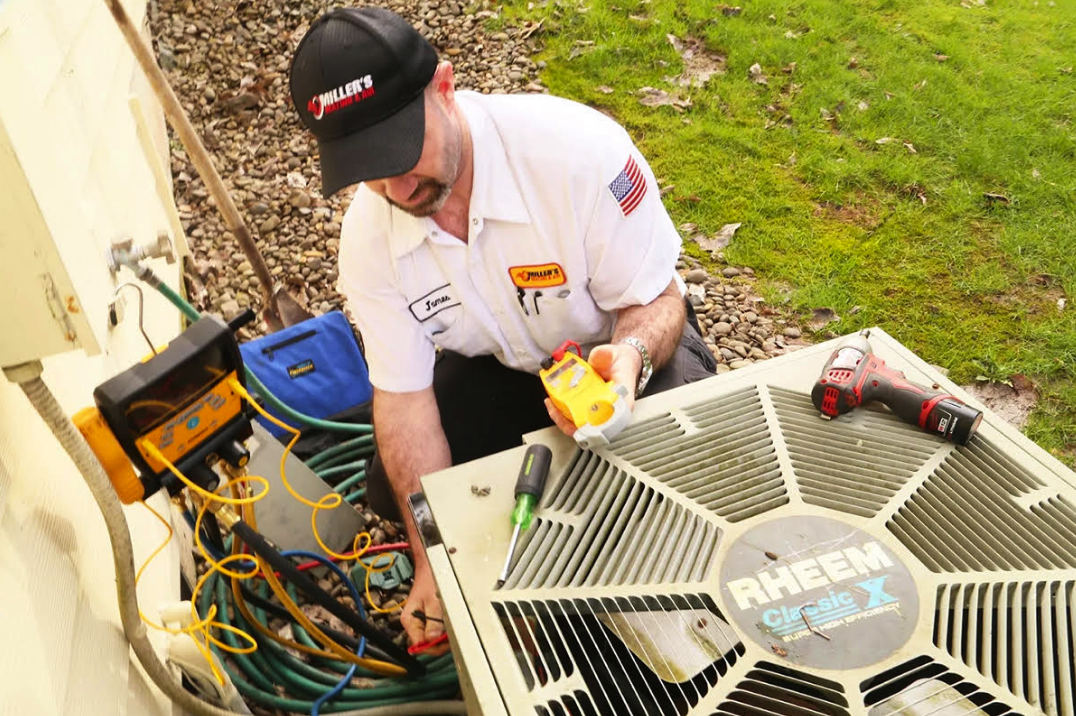
How Central Air Conditioning Cools a Home
Central AC systems cool air in one place, then push it through ductwork into different rooms. At the same time, it pulls warmer air back through return vents so it can be cooled again.
That loop has to stay balanced.
If the supply air makes it into a room but the return air can’t get back out, it traps heat in that room.
So even if two rooms are working on the exact same system, one just might not be getting the same airflow.
5 Common Reasons Rooms Stay Hot
If you’re dealing with hot spots in house with central air, the issue is usually tied to airflow, ductwork, or how your system is balanced. Below are the most common reasons certain rooms stay warmer than the rest of the home.
1) Poor Duct Design
Ductwork isn’t great in many older homes in Vancouver. A two-story home built in the 80s might have the air handler in the garage or basement.
The downstairs rooms are close, but the upstairs bedrooms are at the end of longer duct runs.
By the time the air reaches those rooms, pressure drops. You still feel airflow, but not enough volume to actually cool the space properly.
If you’ve ever noticed weak airflow from vents in one room, distance and duct design are usually behind it.
Leaks make things worse.
If duct design or leaks are causing uneven cooling, it’s worth learning how regular inspections and sealing can improve airflow and overall system performance—read our guide on The Importance of Regular Duct Inspections and Sealing.
2) Return Air Imbalance
We often think about how our vents are blowing air into our homes, but rarely about how they’re pulling it back out.
If your air vents are blocked or there just aren’t enough, it can trap warm air in certain rooms. That’ll keep the system cycling without actually exchanging air properly.
We see this a lot in homes where doors stay closed.
A bedroom with a supply vent but no dedicated return can slowly pressurize. Air gets pushed in, but it has nowhere to go, and while the rest of the house gets cool, that one gets warmer.
When people ask why one room is hotter than the rest of the house, this is one of the biggest reasons.
3) Insulation Differences
If your AC is not cooling upstairs rooms, there’s a reason.
Part of it is that heat rises, but the bigger factor is the attic.
In the summer, your attic can get much hotter than the rest of your house. That heat eventually works its way downward into ceiling spaces, especially if the insulation isn’t consistent.
Combined with longer duct runs and less return airflow, upstairs rooms start the day warmer and stay warmer.
Even with a properly working system, you’re asking those rooms to overcome more heat than the rest of the house.
4) Thermostat Placement
The thermostat gives readings to the rest of your system to tell it when to shut off. Even if one of your rooms is still hot, your system might not be able to tell.
For example, if your thermostat is placed in your hallways, which stays relatively cool, it might show that it has hit the set temperature before other rooms do.
So the system turns off.
And while nothing is technically broken, it can be incredibly frustrating.
5) Closed Dampers or Airflow Restrictions
Do you have a vent that’s partially closed? How about a piece of furniture sitting over a register? Or maybe one of your HVAC filters is dirty. All of these things can restrict airflow, which can throw off the balance of the whole system.
When It’s Actually an AC Problem
If the entire house isn’t cooling, it’s probably something mechanical.
Watch for:
Air that feels warmer than it should
The system running constantly without reaching temperature
Unusually high energy bills
Since the problem could be anything from a refrigerant leak to mechanical failure with the blower, it’s best to call an air conditioning repair in Vancouver, WA, for a diagnosis.
What You Can Try Before Calling for Service
Start with the easy stuff.
Replace the filter if it’s even slightly dirty. That alone can improve airflow.
Walk through the house and check vents. Make sure nothing is blocking them. Open any that were partially closed.
Look at return vents too. If they’re covered or dusty, airflow back to the system gets restricted.
If you have ceiling fans, run them. They won’t lower the temperature, but they help move air around so rooms feel more consistent.

When to Call an HVAC Technician
If you’ve tried everything above and you still have that one room that won’t get cooler, it’s time to call a technician.
They’ll be able to measure the airflow coming from each vent and check for duct leaks.
The solution could be as simple as sealing a section of ductwork to plug up a leak, but other times it might involve rebalancing the entire system so rooms stop trapping heat.
If the system itself shows signs of strain, you may need AC repair in Vancouver, WA.
If uneven cooling continues, it may require professional airflow testing or air conditioning service in Vancouver, WA to properly diagnose the issue.