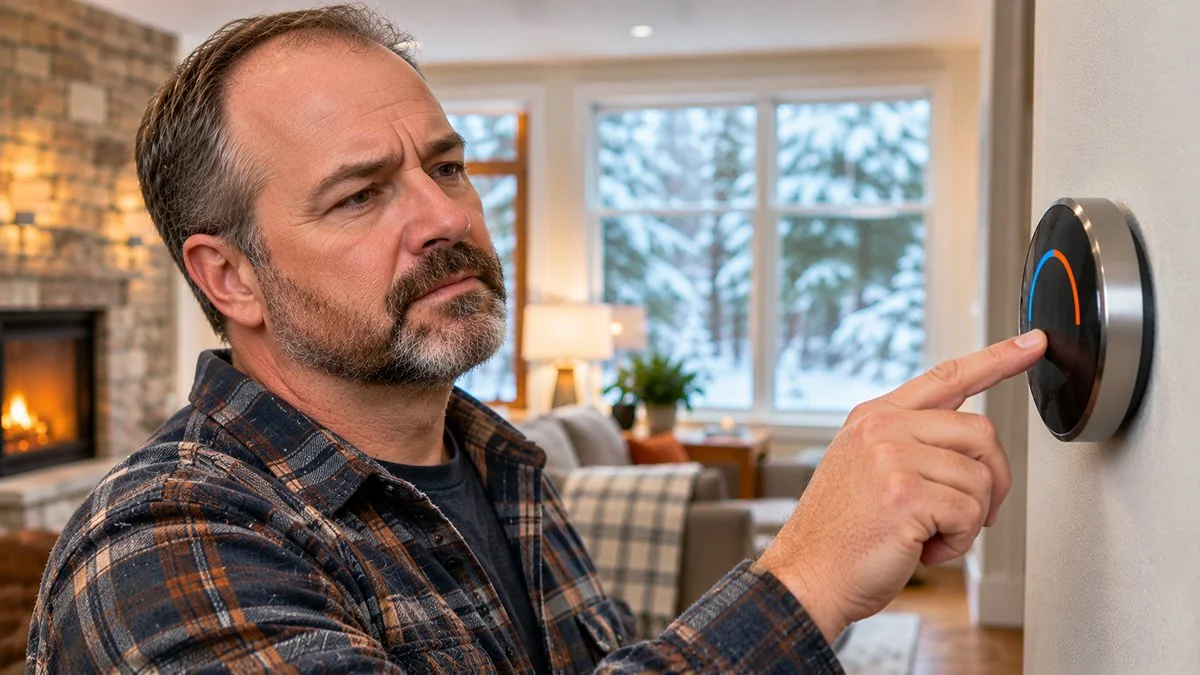
You hear your furnace kick on, feel some warm air coming through the vents, and then it shuts off. A few minutes later, it starts up again.
Is something wrong?
Not necessarily. Furnaces are supposed to turn on and off throughout the day. That's how they maintain the temperature you've set on your thermostat.
But if your furnace keeps turning on and off every few minutes without properly heating your home, there may be a problem. This is often called short cycling, and it can happen for several different reasons.
Some are relatively simple. Others may require a heating technician to take a closer look.
Is It Normal for a Furnace to Turn On and Off?
Yes. Most furnaces operate in heating cycles.
When the indoor temperature drops below your thermostat setting, the furnace turns on and begins heating your home. Once the thermostat is satisfied, the heating cycle ends.
How long a normal cycle lasts depends on several factors, including the outdoor temperature, your home's insulation, the size of your furnace, and the type of equipment you have.
On colder days, your furnace may run longer or more frequently. That's not necessarily a problem.
What you want to watch for is a change in how your system normally operates, especially if it starts shutting down after only a few minutes and then repeatedly restarting.
What Is Furnace Short Cycling?
Furnace short cycling happens when the heating system repeatedly stops before completing a normal heating cycle.
For example, your furnace might turn on, run for two or three minutes, shut off, and then start again shortly afterward.
You may also notice that the house never quite reaches the temperature on the thermostat.
The important thing is that not every short heating cycle means something is broken. Some systems naturally have shorter cycles during mild weather, and different thermostats and equipment types operate differently.
But frequent, unusually short cycles can indicate an airflow restriction, thermostat problem, overheating condition, or another issue that needs attention.
1. Your Furnace Filter Is Dirty
A dirty air filter is one of the first things worth checking when your furnace keeps shutting off.
Your heating system needs enough airflow to move heat from the equipment into your home. If the filter becomes heavily clogged, it can restrict that airflow.
In some furnaces, this may cause the heat exchanger to become too hot. A safety device called the high-limit switch can then shut off the burners to help protect the equipment.
The blower may continue running to cool things down, and the furnace may attempt another heating cycle afterward.
If this keeps happening, you could hear the furnace starting and stopping repeatedly.
Check your filter and replace it if it's dirty. Just make sure you're using the correct size and a filter that's appropriate for your system.
And keep in mind that a clean filter doesn't automatically rule out other airflow problems.
2. Your Thermostat May Be Causing the Problem
Sometimes the furnace itself is working correctly, but the thermostat isn't controlling it as expected.
A thermostat can cause unusual cycling if it's improperly configured, malfunctioning, or located somewhere that doesn't accurately represent the temperature in the rest of your home.
For example, a thermostat installed near a heat source might register a warmer temperature than the surrounding rooms.
That could cause the heating cycle to end sooner than you expect.
Incorrect thermostat settings or wiring problems can also affect how the system operates.
Before assuming the furnace needs repair, check that the thermostat is set to HEAT and that the temperature setting makes sense. If the display is blank or behaving strangely, that may also be worth investigating.
3. Your Furnace May Be Overheating
If your furnace turns on and then shuts off before the house gets warm, overheating is another possibility.
We already mentioned dirty filters, but they're not the only reason a furnace can overheat.
Restricted ductwork, blocked supply registers, blower problems, or other airflow issues can prevent enough heat from being carried away from the heat exchanger.
When the furnace gets too hot, the high-limit switch may shut off the burners.
This is a safety feature, not something you want to bypass or ignore.
If your furnace repeatedly shuts off because of a high-limit condition, the underlying cause needs to be diagnosed. Continuing to operate with an unresolved overheating problem can put unnecessary stress on the equipment.
4. Your Furnace May Be Too Large for Your Home
Bigger isn't always better when it comes to heating equipment.
An oversized furnace may produce heat faster than your home needs it, causing the thermostat to reach its set temperature quickly.
The furnace shuts off, the indoor temperature eventually drops, and another heating cycle begins.
This can lead to shorter, more frequent cycles, although the exact behavior depends on the thermostat, furnace controls, ductwork, and home.
You may notice uneven temperatures or more noticeable changes between heating cycles.
If your furnace has operated this way since it was installed, equipment sizing could be worth investigating.
A technician can evaluate the system and determine whether the furnace's heating capacity is appropriate for your home. Proper sizing involves more than just square footage.
5. There Could Be an Ignition or Flame-Sensing Problem
Gas furnaces have several components that help them start safely and confirm that the burners are operating correctly.
If something goes wrong during startup, the furnace may shut down before it has a chance to heat your home.
For example, a dirty or failing flame sensor may prevent the control board from confirming that a flame is present. The system may shut off the gas valve and attempt another ignition sequence.
Problems with the igniter, gas supply, venting, or other safety controls can also interrupt heating.
These issues can sometimes sound like short cycling, but they're not always the same as a furnace completing unusually short heating cycles.
If you hear repeated startup attempts without getting much warm air, it's best to have the system inspected rather than trying to repair gas or ignition components yourself.
6. Your Furnace Blower May Not Be Working Properly
The blower moves heated air through your ductwork and into the rooms of your home.
If it isn't operating correctly, heat can build up inside the furnace.
A blower motor problem, incorrect fan setting, dirty blower wheel, or electrical control issue may interfere with normal airflow.
Depending on the equipment, the furnace may shut off its burners to protect itself from overheating.
You might notice weak airflow from the vents, unusual noises, or a blower that continues running after the burners have stopped.
These symptoms can help a technician narrow down the problem, but they don't point to one specific repair.
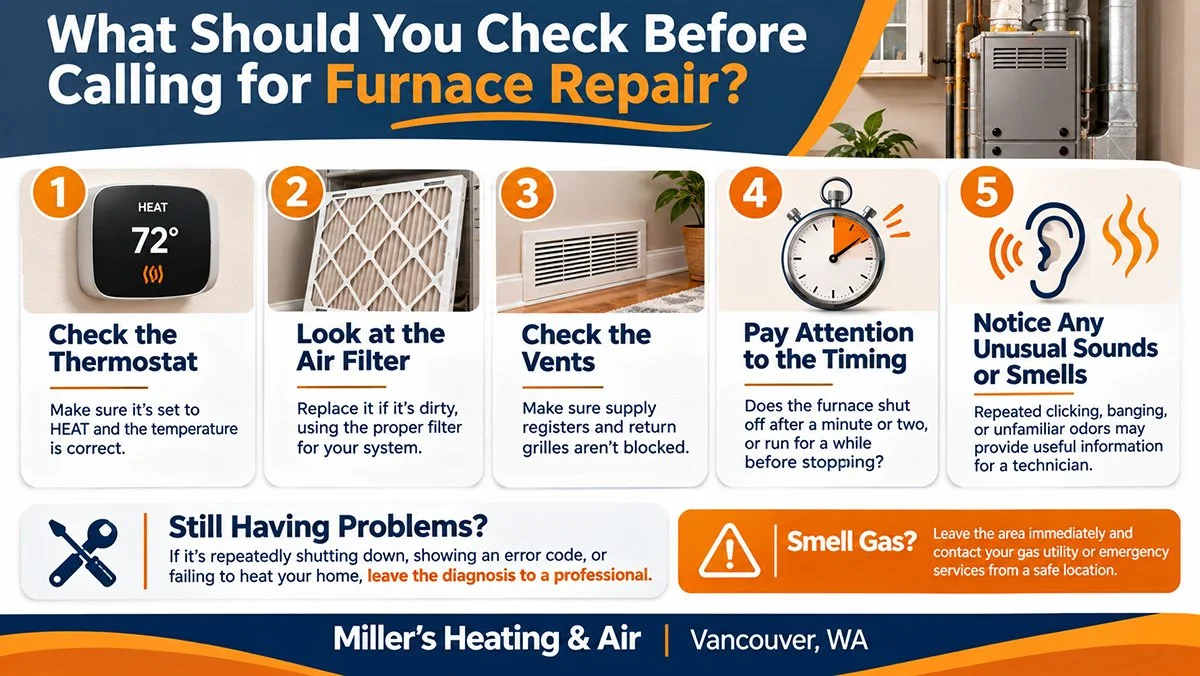
What Should You Check Before Calling for Furnace Repair?
There are a few simple things homeowners can check without opening the furnace or working on electrical or gas components.
Check the thermostat. Make sure it's set to HEAT and the temperature setting is correct.
Look at the air filter. Replace it if it's dirty, using the proper filter for your system.
Check the vents. Make sure supply registers and return grilles aren't blocked by furniture, rugs, or other belongings.
Pay attention to the timing. Does the furnace shut off after a minute or two, or does it run for a while before stopping?
Notice any unusual sounds or smells. Repeated clicking, banging, or unfamiliar odors may provide useful information for a technician.
You don't need to keep restarting the furnace to figure out what's wrong.
If it's repeatedly shutting down, showing an error code, or failing to heat your home, leave the diagnosis to a professional.
If you smell natural gas, leave the area immediately and contact your gas utility or emergency services from a safe location.
When Should You Call an HVAC Technician?
If your furnace starts and stops occasionally but your home stays comfortable, it may simply be operating normally.
However, it's worth scheduling service if you notice any of the following:
The furnace repeatedly shuts off after only a few minutes
Your home isn't reaching the thermostat setting
The burners shut off while the blower continues running
The system keeps attempting to ignite
Airflow from the vents seems unusually weak
You notice unfamiliar noises or recurring error codes
A technician can inspect the equipment, check airflow and safety controls, and determine what's causing the repeated shutdowns.
Sometimes the fix is straightforward. Other times, the problem involves several connected parts of the heating system.
Keep Your Furnace Heating Your Home Reliably
A furnace that turns on and off isn't automatically broken. Normal heating cycles are part of how the system maintains indoor comfort.
The concern is when those cycles become unusually short, happen repeatedly, or leave your home feeling cold.
If your furnace keeps turning on and off and you're not sure why, Miller's Heating & Air can help. We provide furnace repair and heating services throughout Vancouver, WA, and Clark County.
Our technicians can inspect your system, identify the cause, and recommend the repairs needed to get your heating working properly again.