Summer HVAC Maintenance Helps Lower Cooling Costs
When you’re dealing with mild weather in spring, there’s not a lot that gets asked of your system. However, when the first real hot stretch shows up, it puts your AC into overtime..
At that point, you might notice higher utility bills and that your rooms don’t feel as comfortable as they usually do.
Many homeowners describe this as their AC not keeping up with heat, even though the system seems to be running constantly.
Summer HVAC maintenance helps because it gets the system out of that slow decline. It improves airflow, checks the electrical parts, cleans components, and helps the AC cool the house without wasting as much energy.
If your AC running longer in summer has become the new normal, maintenance is one of the first places to look.
Why Cooling Costs Rise in Summer
Cooling costs rise in summer because your system has more heat to remove.
On a warm day, your AC may only need to run in short cycles. During a hot afternoon, especially after the roof, walls, attic, and windows have absorbed heat for hours, the system has to work much harder to pull that heat out of the house.
Longer AC cycles = more electricity.
Higher outdoor temperatures make it harder for the outdoor unit to release heat, while indoor heat gain from sunlight, cooking, electronics, and people adds even more load.
That’s why rising energy bills from your AC system don’t always mean something is broken. Sometimes, summer simply asks more from the equipment.
The problem starts when the system uses far more energy than it should because it’s dirty, strained, or overdue for service.
How Dirty Components Increase Energy Use
Dirty parts make it more expensive to cool your system.
The evaporator coil inside your system absorbs heat from indoor air. The condenser coil outside releases that heat outdoors. If either coil gets dirty, the system loses efficiency.
Outdoor coils tend to collect a lot over the year. Pollen, grass clippings, cottonwood fluff, dust, and leaves can stick to the coil fins and block heat transfer. When dirty condenser coils can’t release heat properly, the AC keeps running because it hasn’t finished the job.
Indoor buildup causes similar problems. A dirty evaporator coil can restrict airflow and reduce how much heat the system removes from your home. The blower then has to push air through a system that’s already struggling.
Your AC might still cool your house, but it might also take a lot longer, cost you more, and put unnecessary strain on the internal components.
Why Airflow Matters for Efficiency
If air can’t move through the system properly, the AC can’t remove heat properly. That means longer runtimes, higher bills, and rooms that never quite get to the temperature you want.
Dirty filters are often the biggest culprit because they restrict airflow throughout the system.
Blocked return vents cause another issue because the system can’t pull enough warm air back in to cool it.
Weak airflow also makes other problems worse. Coils may get too cold. The compressor may run longer. The thermostat may keep calling for cooling because the house never quite shows that it’s cooler.
If you want to improve AC efficiency in summer, start with optimizing your airflow.
Electrical Components Wear Down in Summer
Summer is hard on the electrical side of your AC.
When outdoor temperatures climb, the system starts more often and runs longer. That adds heat and electrical stress.
A weak capacitor may be okay in mild weather, but fail during the first stretch of heavy AC use. You might even hear a hum from the outdoor unit, or notice that there’s a delay on startup. Contactors can pit or wear down over time, which affects how reliably power reaches the equipment.
During a maintenance visit, a technician can catch those warning signs pre-breakdown.
Refrigerant Performance During Heatwaves
Refrigerant does the actual heat-moving work inside your AC system.
If the system is low on refrigerant, it usually means there’s a leak. It also means the AC can’t absorb and move heat the way it should.
This can mean longer cooling cycles or no cool air at all during a heatwave. In some cases, ice can even form on the refrigerant lines or evaporator coil.
Extreme heat also changes system pressures, which makes an already struggling system work even harder.
How Tune-Ups Help Reduce Cooling Costs
A tune-up helps lower cooling costs by giving the system a better chance to run cleanly and efficiently.
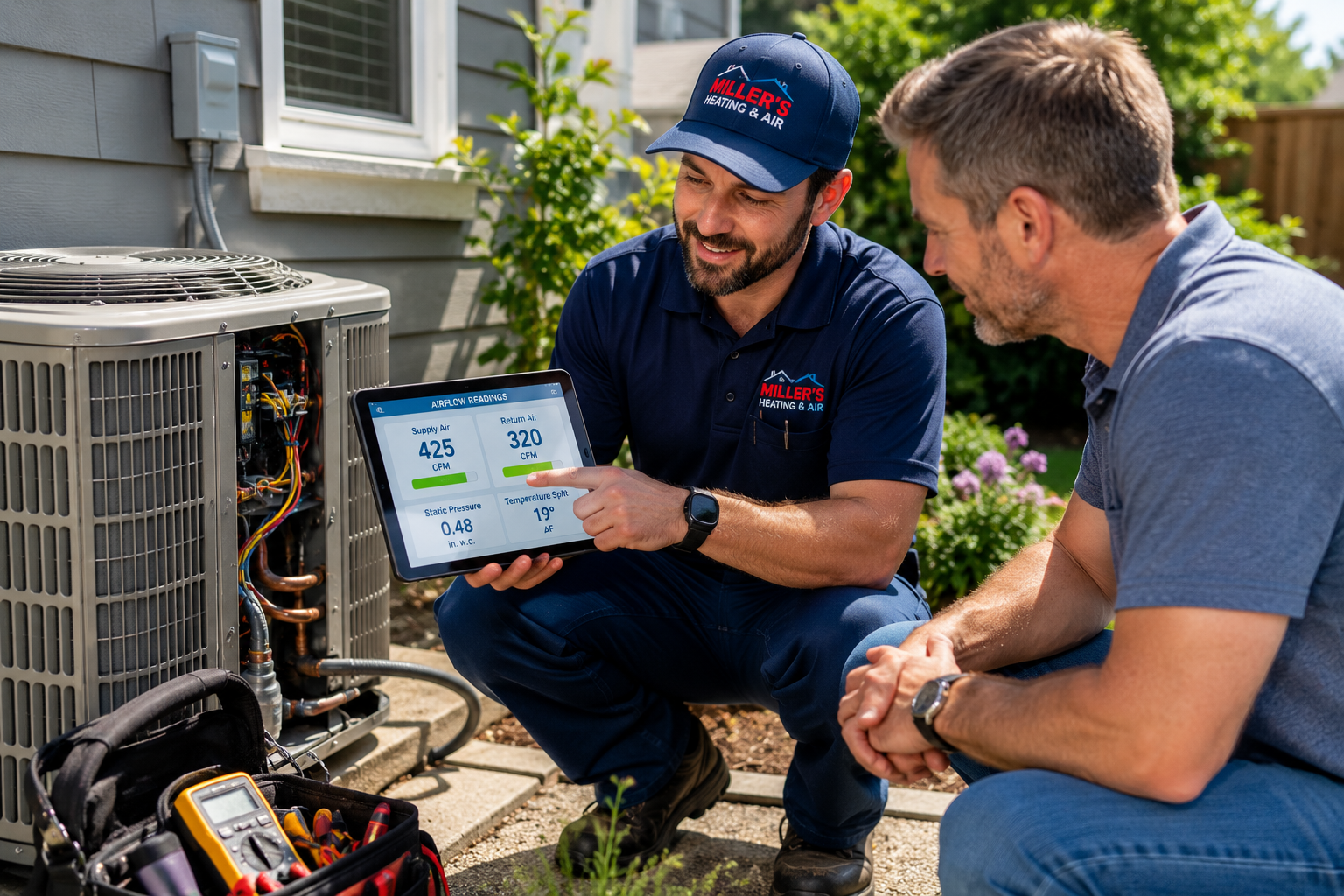
By cleaning your coils, you can improve heat transfer. Similarly, by getting your airflow tested, you can see whether the system is moving enough air across the equipment and through the home.
Electrical inspections catch weak capacitors, worn contactors, and loose connections, while thermostat calibration can keep the AC from running longer than necessary or shutting off before the home feels comfortable.
If you’re comparing HVAC tune-up specials, look for service that includes real testing and cleaning.
Why Maintenance Helps Prevent Breakdowns
Breakdowns usually don’t come from nowhere. One issue stacks onto another until the system finally quits.
Maintenance interrupts that chain.
By looking for small issues early on, you reduce the chance of emergency repairs during the hottest week of the year. Plus, you can protect the compressor, which is one of the most expensive parts of the system.
What Homeowners Can Do Between Service Visits
You don’t need to be an HVAC tech to help your AC run better.
Here are a few things we recommend doing:
Change the filter regularly during cooling season. If you have pets, allergies, or a dusty home, check it more often.
Keep the outdoor unit clear of leaves, grass clippings, weeds, and stored items, so that it has space to release heat.
Pay attention to airflow changes. If one room suddenly feels warmer or the vents don’t push as much air as they used to, don’t ignore it.
Watch your energy bills. A sudden jump can give you an early clue that the system is running longer than normal.
Small homeowner habits won’t replace professional maintenance, but they make a difference.
When to Schedule Summer HVAC Service
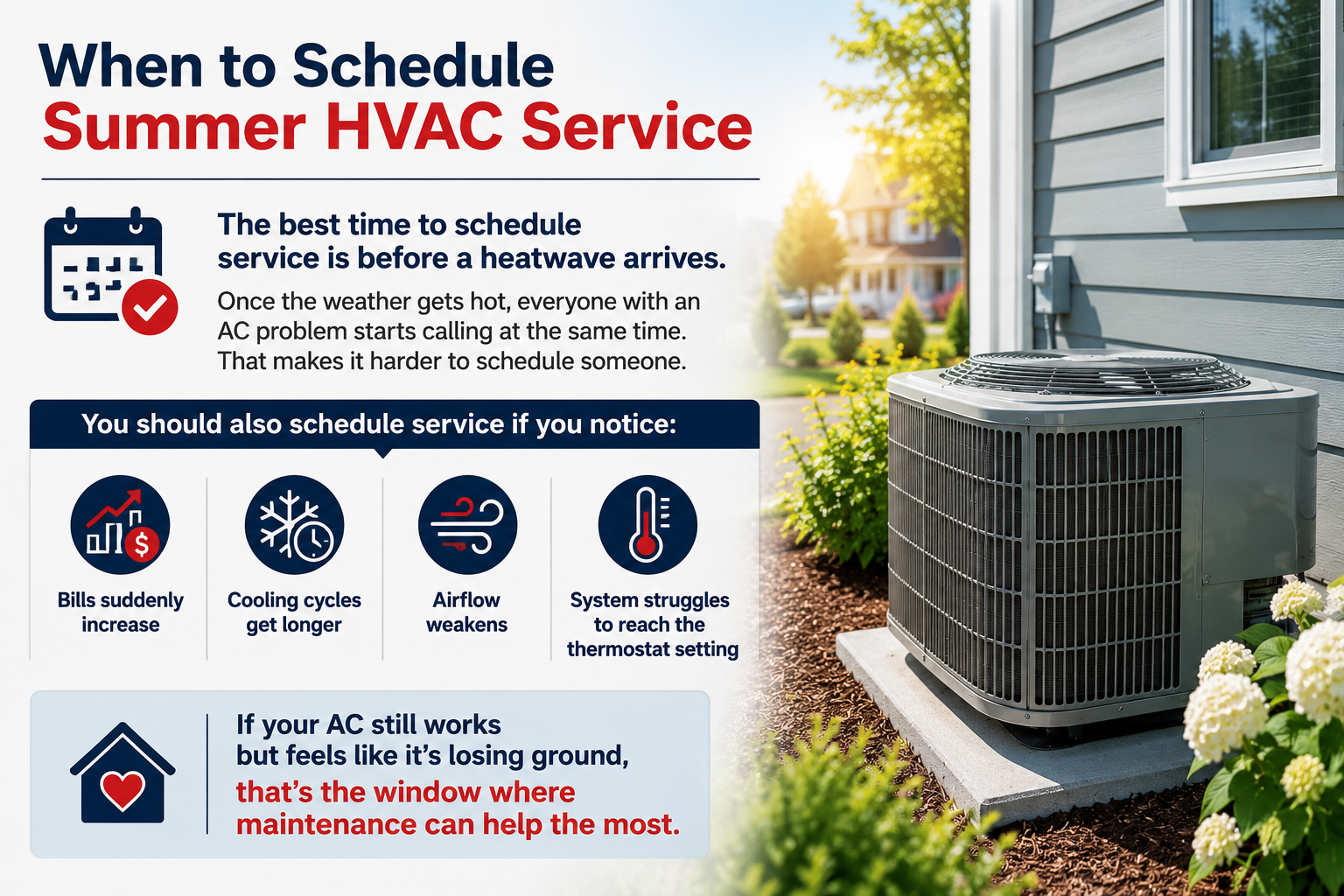
The best time to schedule service is before a heatwave arrives.
Once the weather gets hot, everyone with an AC problem starts calling at the same time. That makes it harder to schedule someone.
Beyond that, you should also schedule service if your bills suddenly increase, cooling cycles get longer, airflow weakens, or the system struggles to reach the thermostat setting.
If your AC still works but feels like it’s losing ground, that’s the window where maintenance can help the most.