How to Read Your HVAC Warranty: What Homeowners Should Know
HVAC warranty paperwork can be difficult to interpret, especially when there are several documents involved. Different documents may list different coverage periods, registration requirements, and exclusions.
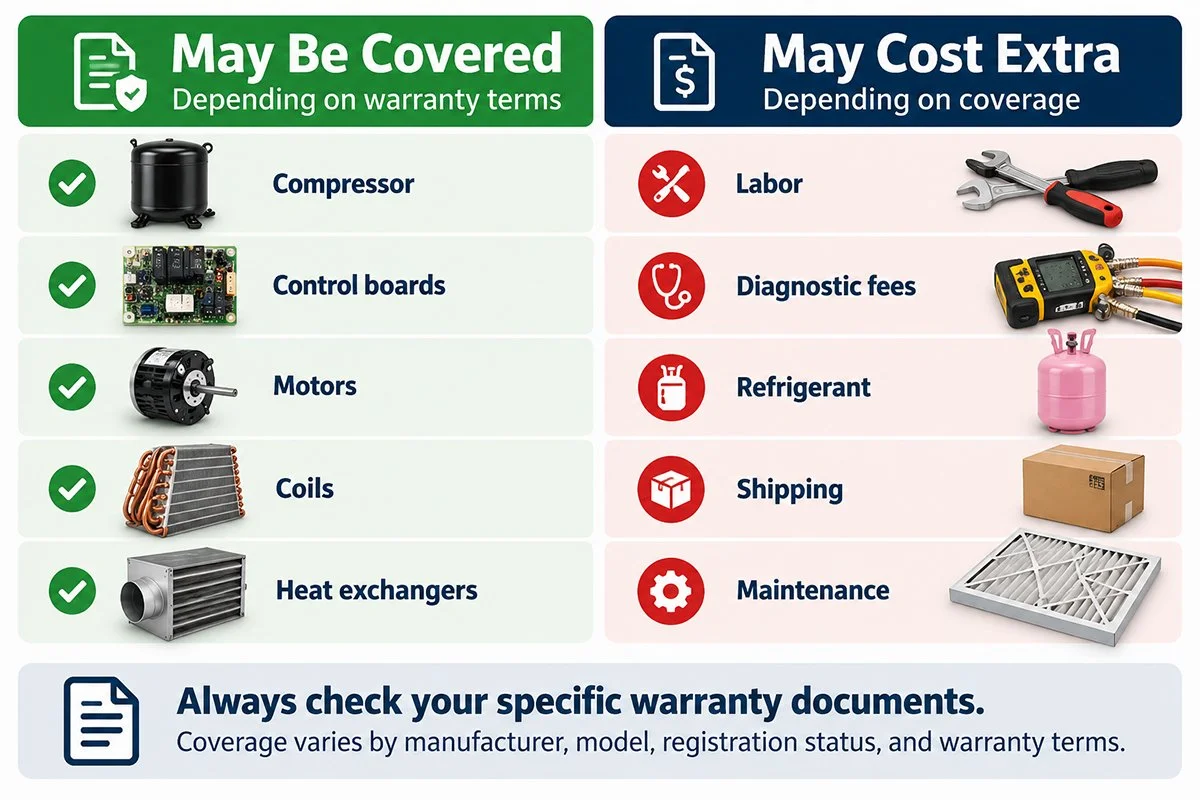
And just because you have a warranty doesn’t mean every repair will be free. Your warranty may just cover a failed component, leaving you responsible for labor, diagnostic fees, refrigerant, shipping, or other costs.
We recommend taking a few minutes to understand your coverage. That way, if if something goes wrong, you'll know what may be covered and what you'll need to pay for.

What Does an HVAC Warranty Actually Cover?
HVAC warranty coverage can vary by manufacturer and model. Even two systems from the same manufacturer may have different terms.
In general, a manufacturer's warranty may cover specific equipment components if they fail because of a defect in the materials or manufacturing. Depending on the system, that could mean the compressor, heat exchanger, coil, control board, or motor.
The only real way to know your coverage is to read the documents for your specific equipment.
Parts Warranty vs. Labor Warranty
An HVAC parts warranty generally applies to the equipment component itself. If a covered control board fails during the warranty period, the manufacturer may provide a replacement board.
The warranty may not cover the labor involved in diagnosing the problem, replacing the part, and testing the system.
Then, there's your HVAC labor warranty. This warranty might be covered through a separate contractor (typically, the installing company).
Some companies include limited labor coverage after installation. Others charge extra. A manufacturer may also have separate coverage for certain major components, such as a compressor or heat exchanger.
Does Your Equipment Need to Be Registered?
Not necessarily. However, some manufacturers require registration after you purchase a system if you want extended coverage. The deadline for HVAC warranty registration can vary.
Some manufacturers give homeowners a limited number of days after HVAC installation, but the process ultimately depends on the type of product and the state where the equipment is installed.
Your installation paperwork may include registration instructions, or the contractor may have submitted the information on your behalf.
To check your status, look for a confirmation email, registration number, or manufacturer warranty lookup tool. You may need your equipment’s model and serial numbers. If you can’t find the information, contact the installing contractor or the manufacturer directly.
Some manufacturers also provide different registration terms or protections depending on state law, so check the warranty documents for your specific equipment and location.
Can HVAC Maintenance Affect Your Warranty?
It depends. There are maintenance expectations in some warranty documents, meaning regular service is a specific condition of coverage.
That’s why it’s important to read the manufacturer’s instructions instead of relying on general advice. The warranty paperwork may explain what records you need to keep, who can perform service, or what types of damage are excluded. These details are not the same for every system.
It’s also a good idea to keep your own service records, such as invoices, inspection reports, repair receipts, and notes about filter changes. That way, if a warranty question comes up later, you’ll know what work was performed and when.
Recommended maintenance differs from an actual warranty requirement. Just because a technician recommends annual inspections to help evaluate the system’s operation doesn’t mean you’ll void your warranty if you miss one inspection.
What Isn’t Usually Covered by an HVAC Warranty?
Warranty exclusions vary, so just because the following components aren’t usually covered by warranty, that doesn’t mean your specific warranty doesn’t cover them.
Normal wear or maintenance items.
Improper installation.
Damage caused by neglect or improper maintenance, where excluded by the warranty terms.
Damage from external causes, such as flooding, lightning, or physical impact.
Labor and service costs (if the warranty only covers the replacement component).
Changes to the equipment or use outside the manufacturer’s instructions.
Remember, these are general categories. The manufacturer’s warranty documents and the facts surrounding the failure will ultimately determine how your claim is handled.
What to Check Before Scheduling a Warranty Repair
Gather the information that a contractor or manufacturer will likely need before you make a call.
Write down the manufacturer, model number, and serial number. You’ll likely find these details printed on a data plate attached to the outdoor unit, furnace, air handler, or indoor coil.
See if you can also find the original installation date, which may be on your invoice, permit records, registration confirmation, or paperwork from the installing company.
Check whether the equipment was registered and locate any warranty documents. If you purchased a home with an existing HVAC system, check whether the warranty transfers to a new owner and whether any paperwork or deadlines apply.
Finally, collect recent maintenance and service records. You may not need all of them, but having them available can help the contractor understand the system’s history and answer questions more efficiently.
Questions to Ask Before Paying for an HVAC Repair
Before approving the repair, ask the contractor to explain the expected costs and warranty process.
Is the failed component covered under my HVAC warranty coverage?
Does the warranty cover the part only, or does it also include labor?
Is there a diagnostic, trip, or service-call fee?
Will I need to pay for refrigerant, shipping, disposal, or other related work?
Does the contractor handle the warranty claim, or do I need to contact the manufacturer?
What information is required?
If the part is covered, how long will it take to receive the replacement?
The more information you have, the easier it’ll be to compare the warranty repair with other options.
Understand Your Coverage Before You Need It
It’s better to review your warranty documents now before your system stops working.
If you’re unsure about your equipment or coverage, Miller’s Heating & Air can review your system information, identify the questions you need answered, and explain what may be included in a repair estimate.
Serving homeowners in Vancouver, WA, and Clark County, Miller’s can also help you separate manufacturer coverage from labor and service costs before work begins.