
Why Your Upstairs Is Hotter in Summer
If your upstairs is hotter than downstairs every summer, you're definitely not imagining it.
This is one of the most common comfort complaints we hear from homeowners once the weather warms up.
Most people try to fix it by lowering the thermostat.
Sometimes that helps a little, but most of the time, it just makes the downstairs colder without doing much else. That’s because uneven cooling upstairs usually has more to do with airflow, attic heat, insulation, and thermostat placement than the setting on your thermostat.
How Heat Naturally Rises
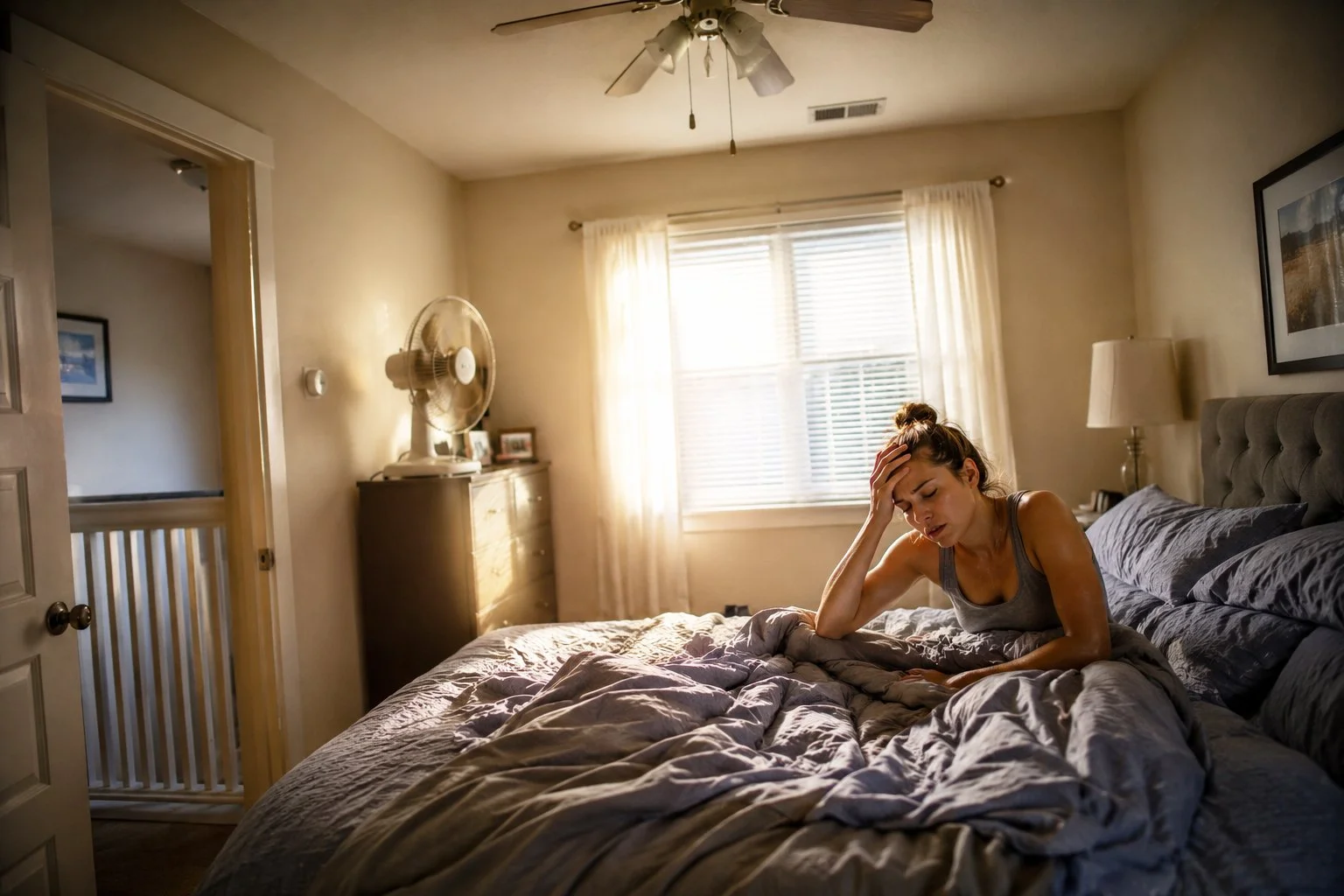
Heat moves upward. So in a two-story home, warm air naturally collects on the upper level while cooler air settles lower in the house. This is called the stack effect. Air moves through the home based on temperature differences, pressure, and leaks in the building.
In winter, stack effect can pull warm air upward. In summer, that same general movement is one reason the second floor is hot in summer. The upper level continues collecting heat from below, the attic, and sun-facing walls and windows.
That doesn’t mean you have to accept it. It just means that to fix it, you need to know where the heat is coming from and why the cool air isn’t keeping up.
The Impact of Attic Heat
Attic heat affecting your home is one of the most common reasons upstairs bedrooms stay warmer during the summer. This works naturally.
On a sunny summer day, attic temperatures can climb far above the outdoor temperature. Even after sunset, that heat slowly radiates downward through ceilings, walls, and gaps in the building.
If your insulation is thin, uneven, compressed, or missing in spots, more heat moves into the rooms below. If the attic doesn’t have great ventilation, hot air can linger for longer. Heat can even leak directly into your upstairs hallway if your attic hatch isn’t properly sealed.
You’ll feel this most in bedrooms directly under attic space, especially rooms with west-facing windows or rooms over garages.
This is also why your upstairs may feel warmer in the evening. The attic absorbs heat all day, then keeps releasing it throughout the night which can create a hot upstairs bedroom.
Airflow Problems Between Floors
An airflow imbalance throughout the house is one of the most common causes of uneven cooling upstairs.
If you’re trying to fix problems with uneven cooling upstairs, you first have to determine whether your system is able to deliver enough supply air to the second floor while pulling warm air back through returns. If either side of that equation is weak, that can be a problem.
Long duct runs are another common issue. In many homes, the upstairs vents sit farthest from the air handler. By the time cooled air reaches those rooms, air pressure may have dropped. If the ducts leak in an attic, crawlspace, or wall cavity, even less air makes it where it needs to go.
Return airflow problems can cause just as much trouble.
A bedroom might have a supply vent but no good return path. So when the door stays closed, cool air has a harder time moving in and warm air has a harder time getting out. The room pressurizes, slowing airflow down. In the end, all the hot air stays.
Thermostat Location Matters
Your thermostat can only read the temperature where it’s installed.
If it’s downstairs, in a hallway, or in some cooler part of the house, it may shut the AC off before the upstairs ever gets comfortable. The system might reach the set temperature at the thermostat and stop, even though the bedrooms upstairs are still warm.
This is why you can’t just keep lowering the thermostat, and why where your thermostat is placed is such a huge deal. A single thermostat on the first floor can’t always reflect what’s happening upstairs, especially on long summer afternoons.
In some homes, zoning or remote sensors can help. In others, the problem sits more with ducts, insulation, or return air.
Other Causes of Uneven Cooling
Not everything is the fault of the attic or ductwork.
Even if nicely sealed with good ductwork, west-facing rooms can heat up late in the day because they take on direct afternoon sun. Older windows can allow a lot of heat transfer, and once those rooms warm up, it’s hard to get them comfortable by the evening. Your best bet might be installing new windows.
Rooms above garages are another common problem. Garages often have less insulation and more heat buildup. If your bedroom is over the garage, it might be warmer and stay warmer than the rest of the upstairs.
What Homeowners Can Check
Start with the simple stuff:
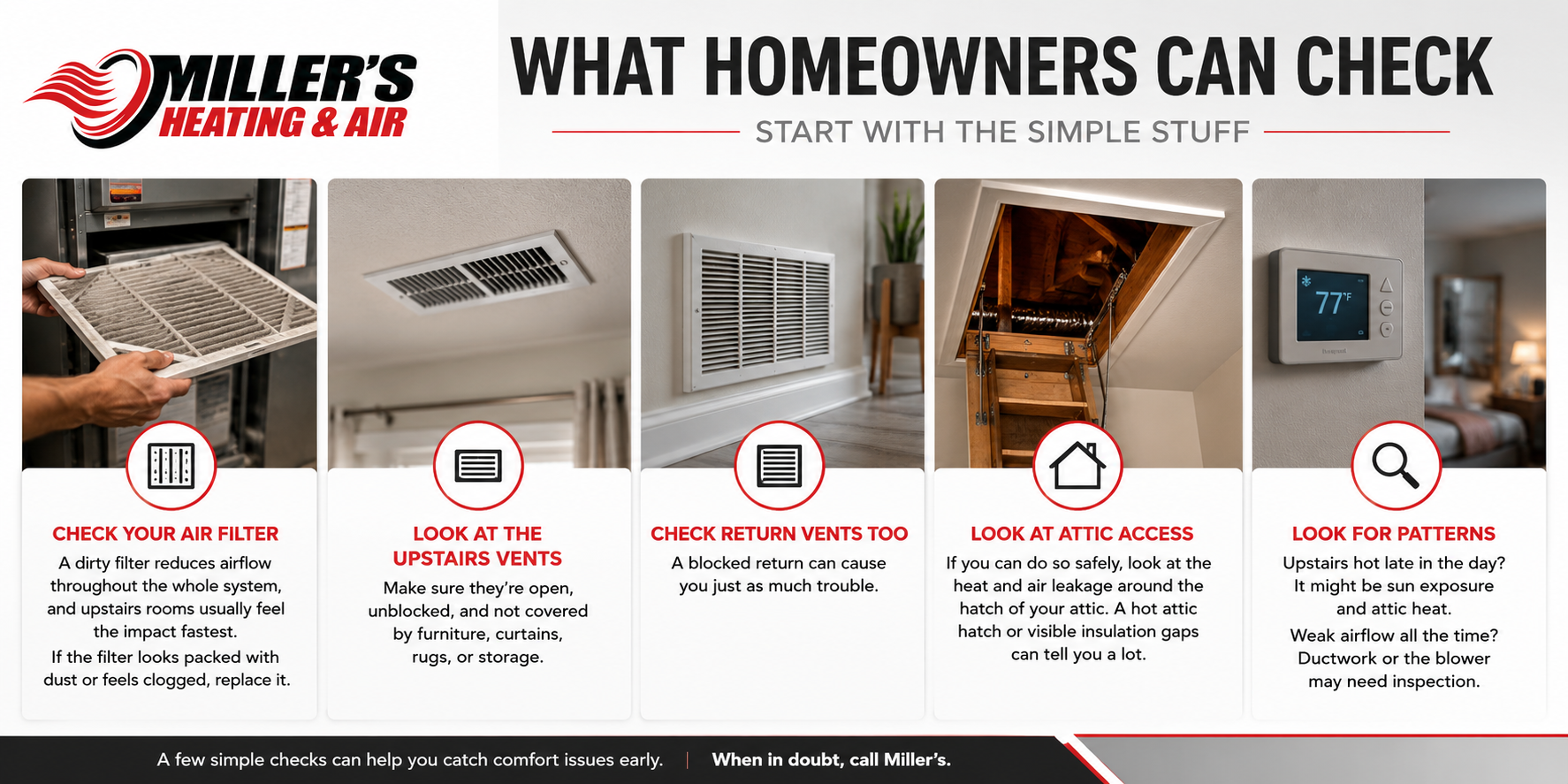
Check your air filter first: A dirty filter reduces airflow throughout the whole system, and upstairs rooms usually feel the impact fastest. If the filter looks packed with dust or feels clogged, replace it.
Look at the upstairs vents: Make sure they’re open, unblocked, and not covered by furniture, curtains, rugs, or storage.
Check return vents too: A blocked return can cause you just as much trouble.
Look at attic access: If you can do so safely, look at the heat and air leakage around the hatch of your attic. A hot attic hatch or visible insulation gaps can tell you a lot.
Also look for patterns. If you notice that the upstairs only gets hot late in the day, the issue might be sun exposure and attic heat. On the other hand, if you feel like you’re getting weak airflow from the vents all the time, the ductwork or blower may need to be inspected.
When to Call an HVAC Professional
Call a professional if the upstairs stays hotter than downstairs no matter what you adjust.
An HVAC technician can test airflow at each vent, inspect your ductwork, check return air paths, evaluate the blower, and see whether the system is cooling properly at the equipment level.
Sometimes, the fix is as simple as replacing a dirty coil or clogged filter. Other times, the home may need the duct sealed or a return airflow vent added.
The important thing is getting true measurements instead of trying to take a guess.
Conclusion
Small comfort issues often have more than one cause.
If your upstairs stays hot every summer, the problem might be the natural way heat rises, a weak return airflow in your system, air loss from the ducts, a poorly placed thermostat, or old window exposure. The best way to find out is with a professional evaluation.