
Should You Cover Your Heat Pump in Winter?
In short, no, you should not fully cover your heat pump. In most cases, covering an outdoor heat pump in winter can do more harm than good. A little bit of top protection can make sense in specific situations, but wrapping the entire unit usually creates more problems.
Heat pumps in the Pacific Northwest are made to handle rain, cold air, and frost. If you want to dive deeper into the details, we’ve compiled a list of Vancouver, WA, heat pump winter tips below.
How Heat Pumps Are Designed to Handle Winter
Your outdoor unit should be pretty sturdy. Manufacturers design heat pumps to operate in all conditions. They expect the unit to sit outside and run all winter.
A heat pump doesn’t work like a traditional air conditioner. In heating mode, it pulls heat from outdoor air, even when it’s cold out. That process requires constant airflow through the coils. If you restrict that airflow, the system can’t operate as it should.
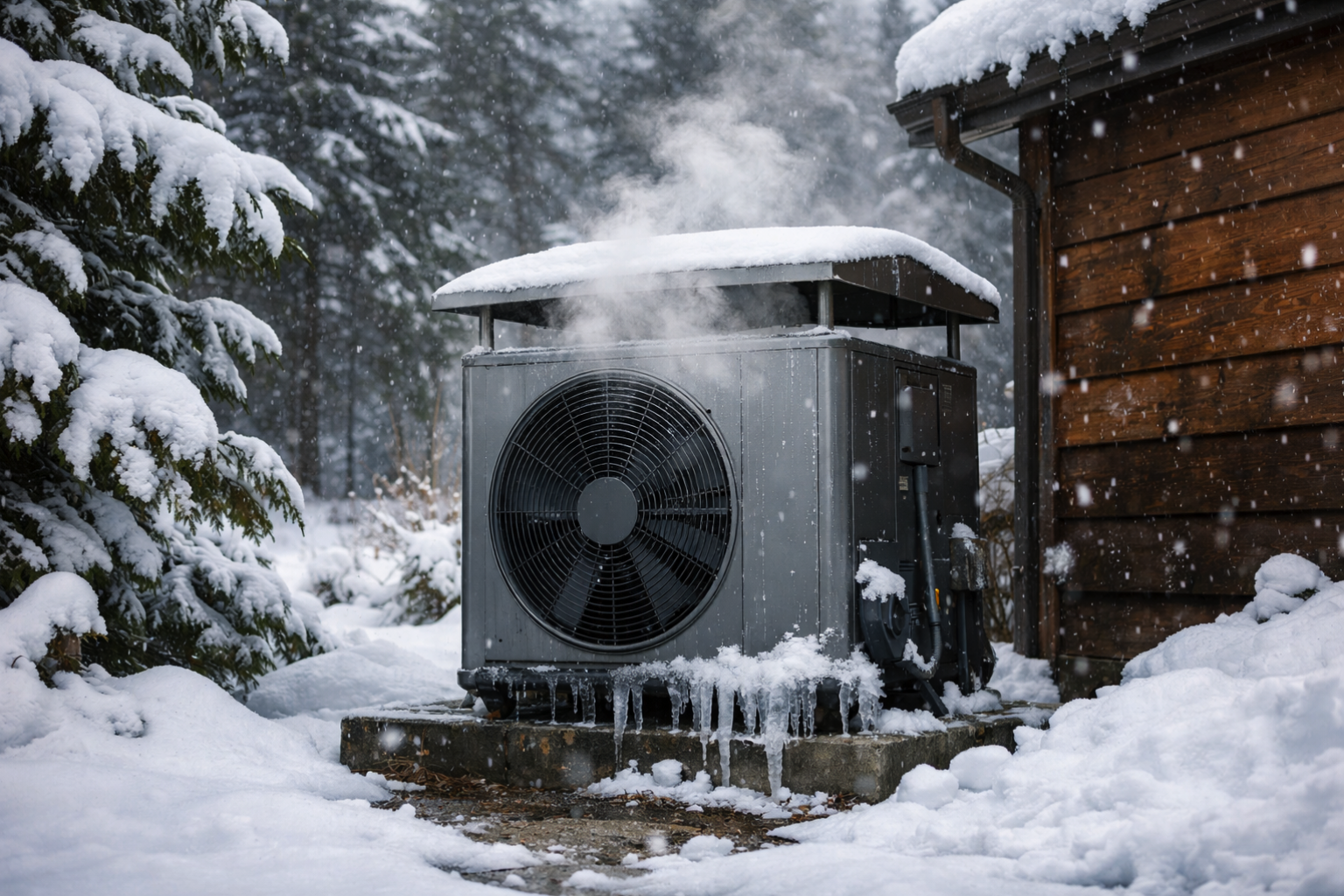
Modern heat pumps also include defrost cycles. When frost builds up on the outdoor coil, the system briefly reverses operation to melt the ice. The process can sometimes look dramatic. Steam may rise from the unit, and you may hear some unusual sounds. All of that is completely normal.
Outdoor heat pump winter care focuses on keeping airflow open and allowing the system to breathe. Blocking it defeats the design.
When Covering a Heat Pump Can Actually Cause Problems
Fully covering a heat pump can trap moisture. Vancouver winters are rainy and damp, so when you wrap a unit with plastic or a tight cover, moisture collects inside and can’t escape. That’s a recipe for corrosion.
Covering your heat pump also restricts airflow. Even small obstructions change how the fan pulls air through the coil. The more restricted the airflow, the less efficient your system.
That’s one of the number one causes of winter heat pump airflow problems, and one that many owners mistake for mechanical failure.
Improper covers can also increase heat pump ice buildup in winter. If the cover interferes with defrost cycles or drainage, ice can accumulate around the base of the unit.
Rodents are another issue with full coverage. It creates sheltered spaces. When small animals look for warm, protected spots to shelter in winter, a tightly wrapped heat pump is the perfect spot.
Situations Where Light Protection Makes Sense
Do heat pumps need covers?
No, but there are some situations where partial protection can help.
If your roofline dumps heavy snow or ice directly onto the outdoor unit, installing a small canopy above it can protect the top. That canopy should block any falling debris but leave the sides completely open.
You can also install a protective barrier at a distance if you have issues with branches or heavy debris constantly blowing into the unit. The key is spacing. Air has to circulate freely around the unit.
What Not to Do When Protecting a Heat Pump
Never wrap the entire unit. Don’t use plastic tarps that sit against the coils and don’t block the fan opening.
Also, don’t shut off the system for winter unless a professional tells you to do so. Heat pumps are designed to operate in cold weather. Turning them off can create other issues, especially if temperatures fluctuate.
Avoid stacking firewood, patio furniture, or storage bins around the unit to maintain airflow.
How Winter Weather Impacts Outdoor Heat Pumps
Wet Vancouver winters can do a number on heat pumps. Frost buildup is normal on the outdoor coil. Your pump’s defrost cycle should clear that frost periodically.
Ice is only a concern when it builds up in thick layers and doesn’t clear during defrost cycles.
If that’s the case, it’s a good idea to make a service call.
Simple Winter Heat Pump Care Homeowners Can Do
Winter heat pump maintenance isn’t complicated. Just follow these few simple steps:
Keep snow, leaves, and debris cleared from around the unit, with at least a couple of feet of clearance on all sides.
Make sure drainage pathways are open so melting frost can flow away from the base.
Occasionally, look for excessive ice buildup that doesn’t melt during defrost cycles.
Change your indoor air filter regularly to maintain good airflow.
These basic steps should optimize your system’s performance.
Warning Signs Your Heat Pump Needs Attention
Reduced heating output is one major sign that something is wrong. If your system is constantly running but doesn’t warm your home, something needs inspection.
If you have excessive ice that doesn’t clear, that also indicates a possible defrost problem.
Make sure to listen for noises as well, such as loud grinding, buzzing, or rattling. These kinds of noises are typically a cause for a maintenance call.
Lastly, if your system cycles repeatedly without reaching the set temperature or your breakers trip when it’s on, call for service. These symptoms usually point to deeper issues.

When to Call a Professional
There are a few reasons to call in a professional HVAC tech:
Persistent ice buildup that doesn’t clear with defrost cycles
Electrical issues or breaker trips
No heat during a cold snap (waiting can put even more strain on the system)
A professional will check your airflow, refrigerant levels, electrical components, and defrost controls to confirm that the system is operating safely and efficiently.
Final Takeaway: Heat Pump Winter Protection
Heat pumps are built for winter conditions in the Pacific Northwest. They need airflow to operate correctly, and covering them can create more problems than it solves.
If anything, just use a bit of light top protection to keep snow or debris from falling directly onto the unit.
If you notice persistent ice, airflow problems, or reduced performance, schedule a professional inspection for heat pump winter emergency repair.