Is Your AC Ready for the First 80° Day?
Every year, homeowners experience the same thing. There’s that first warm weekend. The forecast hits 80°. They switch the thermostat to COOL.
And suddenly they realize their system hasn’t run in months.
That first hot day always has a way of revealing hidden problems. Your system may have seemed perfectly fine last summer, and now it might struggle after sitting idle all winter.
If you’ve ever searched “HVAC service near me” during the first heat spike of the year, you already know how quickly appointment calendars fill up.
Here’s why it’s important to get your system tested now and what to watch for before the temperature climbs.

Why the First Warm Day Exposes Problems
Air conditioners tend to fail when demand spikes.
After months of inactivity, aging components can struggle when power surges through them again.
This is often due to capacitors failing after winter, when months of inactivity and temperature swings leave already-weak components unable to handle the first heavy startup.
Refrigerant leaks surfacing in spring are also common, especially when rising temperatures put more pressure on a system that seemed fine during cooler weather.
Outdoor coils collect debris over winter. Electrical contacts can corrode when moisture builds up in the air.
When the first 80° day hits, your system suddenly has to perform at full capacity. That can be a lot to ask from it if it’s not in good condition.
Getting an AC tune-up before summer can help catch small issues before the first major heat spike.
Five Signs Your AC Isn’t Ready
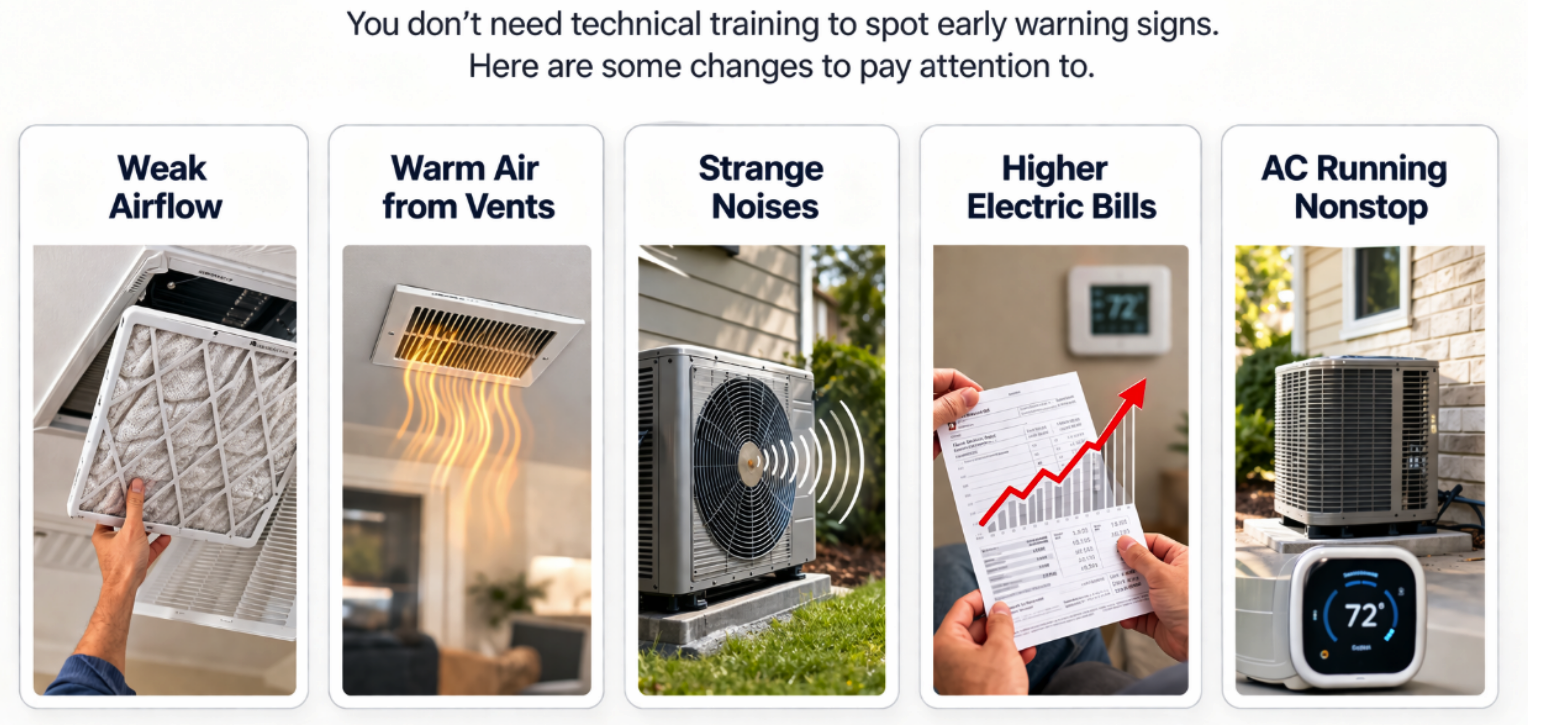
You don’t need technical training to spot early warning signs. Here are some changes to pay attention to.
Weak Airflow
If air feels lighter than it used to or certain rooms are warmer than others, it may be an airflow issue. This could be dirty filters, blocked returns, or buildup on the evaporator coil.
When your system’s airflow is weak, it’s forced to run longer and work harder.
Warm Air from Vents
If the AC runs but pushes lukewarm or warm air, something is wrong. It could be one of many things:
Low refrigerant
Compressor issues
Electrical problems
These issues often surface during the first real cooling demand.
Don’t assume it will correct itself without calling a technician.
Strange Noises
You may hear a strange sound the first time you start your AC up during the hot season. That could be normal. Continuous grinding, buzzing, rattling, or humming are not.
Capacitors often fail in spring. When they get weaker, the outdoor unit can struggle to start. You might hear clicking or humming before it fully turns on.
If you ignore these sounds, you increase the risk of sudden failure.
Higher Electric Bills
If your energy use jumps even though outdoor temperatures are moderate, your AC may be running inefficiently.
If your system is losing refrigerant or has poor airflow, it can jack up your energy bills. The same goes if it’s cycling longer.
AC Running Nonstop
When your system runs continuously but never quite reaches the setting you put on the thermostat, it signals strain.
That strain could stem from:
Dirty outdoor coils
Refrigerant issues
Failing electrical components
Duct leakage
Continuous operation can make things worse.
What Happens When You Wait Too Long
Many homeowners take a wait-and-see approach.
If the system still cools “well enough,” they figure there’s no reason to pay for service.
Then the real heatwave hits.
During peak season, systems run for hours without rest. That’s when breakdowns happen.
Emergency AC repair calls always spike during the first sustained hot stretch. That can make it harder to find an available tech. Not only will you pay more, but in the meantime, you’ll have to deal with high indoor temps.
Why Capacitors Commonly Fail in Spring
Capacitors store electrical energy to help your HVAC’s motors start and run efficiently.
Over time, and with extremely cold weather, they get weaker. After months of inactivity, the first heavy startup cycle can push a marginal capacitor past its limit.
A failing capacitor may cause:
Hard starts
Delayed startup
Outdoor unit not turning on
Breaker trips
Capacitors are relatively inexpensive to replace. Compressor damage is not.
That’s why getting early air conditioning service in Vancouver, WA, is so important.
Refrigerant Leaks Surface Under Heat
Minor refrigerant leaks don’t always show symptoms in mild weather. But as outdoor temperatures climb, pressure inside the system increases. If refrigerant levels are low, cooling efficiency can drop.
You might notice:
Ice forming on lines
Longer cooling cycles
Warm air coming from the vents
If refrigerant is low, it means there’s a leak. You can’t just top it off without repairing the source. Early inspection prevents having to deal with any of that.
Outdoor Coil Debris Builds Up Over Winter
Leaves, pine needles, dirt, and debris can collect around your outdoor unit over the course of the winter. This can lead to restricted airflow as the condenser tries to release heat, making the system work harder than it needs to and putting strain on the compressor.
A quick visual check around the unit can do the trick.
If there are any debris, clean it up. You’ll likely notice a performance boost.
Simple Pre-Season Checks You Can Do
Before scheduling service, take a few minutes for basic checks:
Replace the air filter if it’s dirty.
Clear debris around the outdoor unit (make sure at least a couple of feet of clearance exists on all sides).
Test the thermostat. Confirm it’s set to COOL and the fan is on AUTO.
Check your breaker panel. If your breaker tripped once, reset it once. If it trips again, stop and call a technician.
Why a Professional AC Tune-Up Matters
Even if your system seems like it’s running fine, getting a professional inspection can give you peace of mind before your system is in heavy demand.
During a tune-up, a technician will typically:
Inspect and clean the coils
Check refrigerant levels
Test capacitors and electrical components
Measure airflow
Confirm thermostat accuracy
Many homeowners look for HVAC tune up specials in spring because it’s the ideal time to address small issues affordably.
The First Hot Weekend Always Brings a Service Spike
Every year, once temperatures hit 80°, our phone lines light up and our calendar books out fast.
That’s why we never recommend you wait until the first heatwave comes and leaves you competing for emergency service.
Test your AC early on and give yourself a buffer in case you need repairs.
Schedule Service Before Peak Season
If you haven’t turned your AC on yet this year, do it now on a day when the weather is mild. Let it run for 15 to 20 minutes. Listen. See if you can feel the airflow and take note of any warning signs.
If something feels off, schedule air conditioning service in Vancouver, WA.
By getting things done early, you’ll have a more reliable system when you need it most.
The Bottom Line
That first 80° day will be a stress test for your system. Don’t let weak capacitors or a refrigerant leak be the downfall of your system when you could have avoided it.
Test your system early, deal with minor repairs, and schedule a professional tune-up to reduce the risk of emergency breakdowns later.