
Do I Have a Heat Pump?
Have you ever wondered if you have a heat pump in your home? You're not alone! Many people are curious about their heating systems and want to know how to tell if they have a heat pump.
In this blog, we'll explore what a heat pump looks like, how it works, and how to determine if your home is heated by one. We'll keep it simple and easy to understand. Plus, if you're in Vancouver, WA, and surrounding areas, you can count on Miller's Heating & Air for all your heating and cooling needs. Let's dive in!
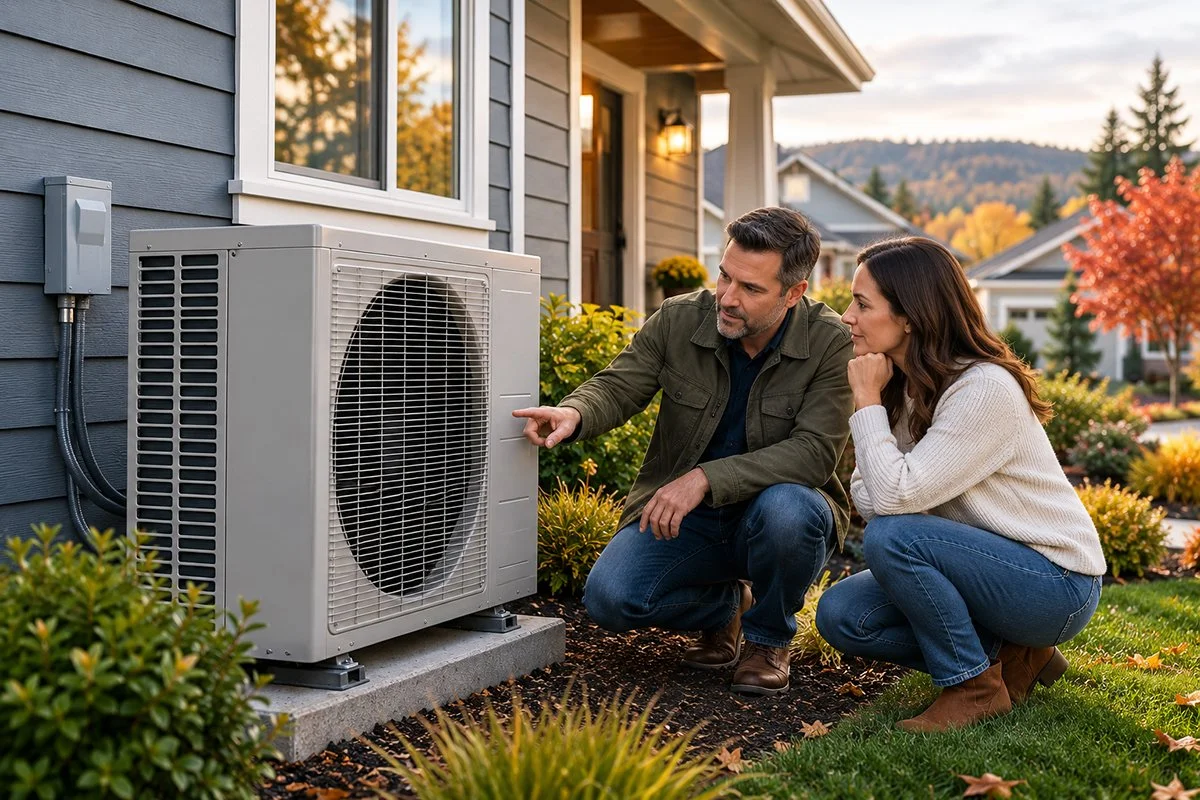
What Does a Heat Pump Look Like?
A heat pump doesn't look like a big, mysterious machine. In fact, it can be quite inconspicuous. Here's what you might find when you're looking for this type of unit with the help of Miller's Heating & Air:
Outdoor Unit: Air source heat pumps are outdoor units that look a bit like an air conditioner. It's usually a metal box with fins and a fan on top. This part is responsible for absorbing heat from the outside air during the winter and releasing it inside your home.
Indoor Unit: Inside your house, there's another part of the system. This part can vary in appearance, but it often resembles a furnace or an air handler. It's responsible for distributing warm air throughout your home.
Pipes and Wires: You might also notice pipes or wires connecting the outdoor and indoor units. These are essential for transferring heat between the two units.
How Does a Heat Pump Work?
Understanding how a heat pump works can help you identify if you have one. Here's a simple explanation:
This type of outdoor unit doesn't create heat like a furnace does. Instead, it moves heat from one place to another.
In the winter, it extracts heat from the outdoor air (even when it's cold outside) and brings it inside to warm your home.
In the summer, it does the opposite, taking heat from inside your home and releasing it outside to cool your house.
Heat pumps use a refrigerant (a special fluid) to move heat effectively. Heat pumps use refrigerant to absorb and transfer heat. As the refrigerant moves through the system, changes in pressure and temperature allow it to absorb heat in one location and release it in another.
How Do I Know If I Have a Heat Pump?
Now that you know what a heat pump looks like and how it works, let's figure out if you have one in your home. Here are some ways to tell:
Check the Outdoor Unit: Go outside and look for a metal unit with a fan and coil. Heat pumps and central air conditioners can look very similar, so the outdoor unit alone may not tell you which type of system you have. One clue is whether the outdoor unit operates when your thermostat is set to heat.
Look at Your Thermostat Settings: If you see options such as "AUX Heat" or "Emergency Heat," your home may have a heat pump with a backup heating source.
Energy Source: Heat pumps can run on electricity or be part of a geothermal system. If you know your heating system runs on electricity and you don't have a gas furnace, it's likely a heat pump.
Ask an Expert: Sometimes, it can be tricky to tell on your own. In this case, consider asking a heating and cooling professional like Miller's Heating & Air to inspect your system.
Check for the "Defrost" Cycle: Heat pumps might have a defrost cycle that turns on during very cold weather. If you notice this happening, it's a good sign that you have a heat pump.
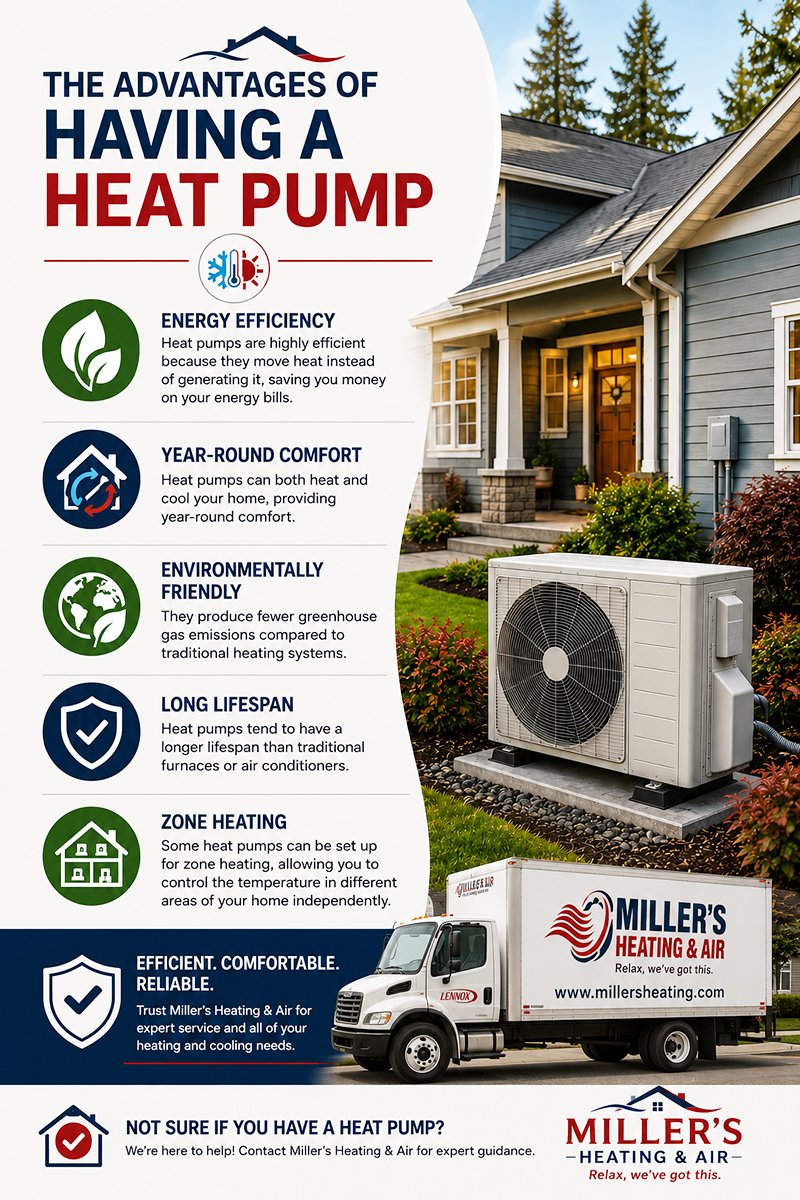
Advantages of Having a Heat Pump:
If you've determined that you do indeed have a heat pump, here are some advantages you can enjoy, with the added assurance that Miller's Heating & Air is there to support you:
Energy Efficiency: Heat pumps are highly efficient because they move heat instead of generating it, saving you money on your energy bills.
Year-Round Comfort: Heat pumps can both heat and cool your home, providing year-round comfort.
Environmentally Friendly: They are environmentally friendly as they produce fewer greenhouse gas emissions compared to traditional heating systems.
Long Lifespan: It tends to have a longer lifespan than traditional furnaces or air conditioners.
Zone Heating: Some heat pumps can be set up for zone heating, allowing you to control the temperature in different areas of your home independently.
Identifying whether you have a heat pump is not as challenging as it may seem, especially with the expertise of Miller's Heating & Air at your disposal.
By observing the outdoor and indoor units, checking your thermostat, and considering the energy source, you can determine if your home is equipped with this efficient heating and cooling system. If you discover that you do indeed have a heat pump, you can enjoy its benefits, such as energy savings and year-round comfort, with the peace of mind that Miller's Heating & Air is there to assist you.
If you're still unsure, don't hesitate to consult a professional to help you with the identification process. Now that you're armed with this knowledge, you can better understand your home's heating system and make informed decisions about its maintenance and operation. Stay warm (or cool) and energy-efficient with Miller's Heating & Air!
Expert Guide Wrap Up
When your home needs to stay warm or cool, your heating and cooling systems are like superheroes. Let's talk about the heating part. Imagine your heat pump as a special box outside your house. Instead of making heat like a furnace, it's like a heat mover.
Even when it's cold outside, it can take some warmth from the outdoor air and bring it inside to make your home cozy. Sometimes, when it's super cold, your heat pump might call for emergency help, kind of like a superhero's sidekick. Heat strips jump in and make hot air to keep you warm.
But when it's time to keep things cool, your heat pump becomes like an air conditioning system. It turns the warm air inside into cool air and sends the heat outside. So, whether it's making your home warm or cool, your heat pump is there to help, like a year-round superhero for your house!
Maintenance and Replacement
If you do have a heat pump, it's important to maintain your system. This will ensure top performance comfort. At Miller's Heating & Air, we have over 75 years experience with heating maintenance.
If your system is over 15 years old and not performing well, it may be time for replacement. Give us a call today and one of our Comfort Advisors can give you tailored quotes to your needs. Financing and rebates are available especially for high efficiency units.
Frequently Asked Questions About Heat Pumps
How do I know if I have a heat pump?
One way to tell is to turn your thermostat to heat and check whether the outdoor unit is running. With many heat pump systems, the outdoor unit operates during both heating and cooling. You can also check the model information on your equipment or look for thermostat settings such as auxiliary or emergency heat. If you're still unsure, an HVAC technician can quickly identify the type of system in your home.
What does a heat pump look like?
A heat pump's outdoor unit looks very similar to a central air conditioner, usually with a metal cabinet, fan, and coil. Because air conditioners and heat pumps can look almost identical from the outside, appearance alone isn't always enough to tell which system you have.
Do I have a furnace or a heat pump?
Your home could have a furnace, a heat pump, or even both. A furnace generates heat and typically uses natural gas, propane, oil, or electricity. A heat pump transfers heat using refrigerant and electricity. Some homes have dual-fuel systems that combine a heat pump with a furnace for backup heating.
What is the difference between a heat pump and an air conditioner?
Both systems can cool your home by transferring heat from inside to outside. The primary difference is that a heat pump can reverse operation to provide heating as well. A standard central air conditioner only provides cooling and requires another system, such as a furnace, to heat the home.
Does a heat pump run outside when the heat is on?
Yes. During normal heat pump operation, the outdoor unit generally runs when the system is heating your home. This is one of the easiest clues that you may have a heat pump rather than a traditional air conditioner paired with a furnace.
What are auxiliary heat and emergency heat?
Auxiliary heat is supplemental heating that can automatically help a heat pump when additional heat is needed. Emergency heat is a thermostat setting that relies on the backup heat source rather than normal heat-pump operation. Seeing AUX Heat or Emergency Heat on your thermostat can be another clue that your home has a heat pump system.
How can Miller’s help you?
Fill out the form below to request information about our products and services,
and a Miller’s Heating & Air Representative will contact you shortly.
If you have an emergency give us a call.
VANCOUVER : (360) 695-6500
PORTLAND : (503) 972-2434