
Where Should a Ductless Mini Split Be Installed?
Installing a ductless mini split is about more than simply finding an open wall.
Where the indoor and outdoor units are placed has a direct impact on comfort, energy efficiency, airflow, and even the lifespan of your equipment. A well-designed installation helps every room heat and cool more evenly while reducing unnecessary strain on the system.
Poor placement, on the other hand, can leave hot and cold spots throughout the home, reduce efficiency, and make future maintenance more difficult.
Whether you're installing a ductless mini split heat pump in a single room or planning a multi-zone system for your entire home, taking the time to choose the right location is one of the most important parts of the installation process.
Below are some of the biggest factors homeowners should consider before installing a ductless mini split system.
Why Placement Matters
One of the biggest advantages of a ductless mini split is that it delivers heating and cooling right where you need it.
Unlike traditional ducted HVAC systems that rely on a network of supply ducts, mini splits condition the air inside each room individually.
That also means placement becomes much more important.
Indoor units are designed to circulate conditioned air across the room. If airflow is blocked by walls, furniture, or poor positioning, the system has to work harder to maintain the temperature you've selected.
Proper placement helps improve:
More even room temperatures
Better airflow throughout the space
Higher energy efficiency
Reduced wear on the equipment
Improved overall comfort
While mini splits are known for their efficiency, they still need room to move air effectively. A professional installation takes the layout of your home into account so the system can perform the way it was designed.
Choosing the Best Indoor Unit Location
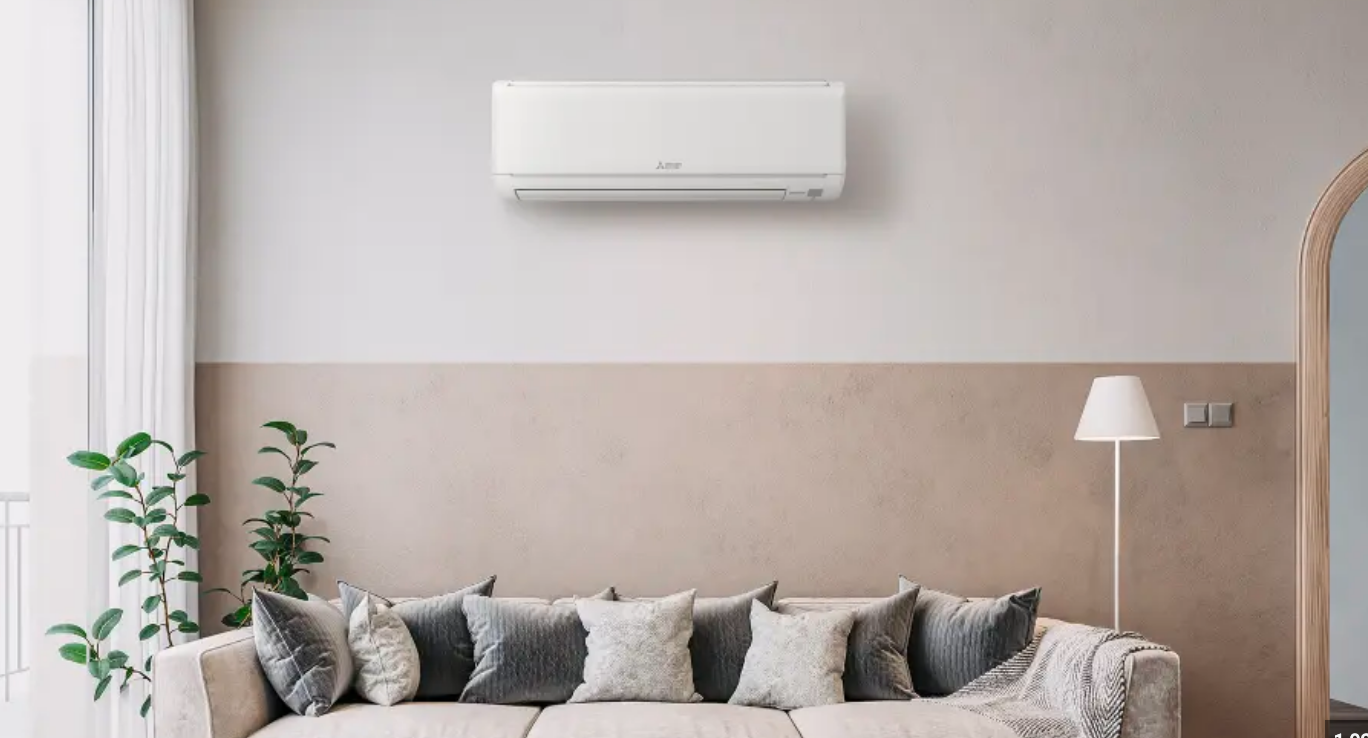
Most ductless indoor units are mounted high on a wall, allowing conditioned air to spread evenly across the room before naturally circulating throughout the space.
Although every home is different, there are several general guidelines that help maximize performance.
The indoor unit should be installed where airflow isn't blocked by tall furniture, shelving, curtains, or large decorative features. It also needs enough clearance around the unit so air can move freely into and out of the system.
It's equally important to think about where that conditioned air will travel.
For example, installing the unit directly above a bed, couch, dining table, or desk isn't always ideal. While the airflow itself isn't harmful, many homeowners find continuous airflow blowing directly on them uncomfortable during long periods of use.
Large open walls often provide the best opportunity for balanced airflow across the room.
Ceiling height also matters. Most manufacturers specify recommended mounting heights that allow the unit to circulate air properly while still remaining accessible for future maintenance.
Professional installers also consider practical items such as refrigerant line routing, electrical connections, condensate drainage, and future service access before recommending the final location.
Room Size and Layout
No two rooms cool exactly the same.
An open living room has very different airflow requirements than a small bedroom, finished basement, bonus room, or home office. That's why room layout plays a major role when designing a ductless mini split air conditioner installation.
Larger rooms may require careful placement to distribute conditioned air evenly throughout the space. Rooms with vaulted ceilings, multiple exterior walls, or large west-facing windows often experience greater heat gain during the afternoon, which can also influence where the indoor unit should be located.
Finished garages, workshops, and additions may have completely different insulation levels than the rest of the home, requiring additional planning to achieve consistent comfort.
In some homes, a single indoor unit can comfortably serve an open floor plan. In others, especially homes with several enclosed rooms, a multi-zone system with multiple indoor units may provide much better comfort throughout the house.
The goal isn't simply to install the equipment—it's to place it where it can efficiently heat and cool the entire living area.
Airflow Considerations
Airflow is one of the biggest factors affecting how well a ductless mini split performs.
Even the most efficient system can't heat or cool properly if air can't circulate throughout the room.
Furniture placed directly beneath the unit, tall bookcases, entertainment centers, or large cabinets can interrupt airflow before conditioned air reaches the rest of the room. Likewise, rooms with closed doors, narrow layouts, or unusual floor plans may require additional planning during installation.
Homeowners sometimes assume that because a ductless system doesn't use traditional ductwork, airflow isn't important. In reality, proper circulation is essential.
A professionally designed HVAC mini split installation considers:
The direction conditioned air will travel
Obstacles that could block airflow
Ceiling height
Room shape
Sun exposure
How occupants actually use the space
The objective is to provide even temperatures throughout the room rather than creating one cool area directly beneath the unit.
Proper airflow also helps the system maintain efficiency, reduce runtime, and improve overall comfort throughout the year.
Outdoor Unit Placement
While homeowners usually focus on the indoor unit, the outdoor condenser is just as important.
The outdoor unit releases heat during the cooling season and absorbs heat during the heating season. To do that efficiently, it needs plenty of unobstructed airflow.
The unit should be installed in a location that provides adequate clearance on all sides while allowing technicians easy access for future maintenance and repairs.
Homeowners should avoid placing outdoor units where they may become surrounded by shrubs, fencing, stored items, or heavy vegetation. Leaves, grass clippings, cottonwood, and other debris can also restrict airflow if allowed to build up around the unit.
Whenever possible, installers also consider:
Snow accumulation during winter
Drainage around the equipment
Noise near bedrooms or outdoor living areas
Refrigerant line length
Electrical accessibility
Protection from accidental damage
Many homeowners ask whether the outdoor unit should always be installed in the shade.
While some shade can be beneficial during hot weather, proper airflow is far more important than constant shade. A well-installed outdoor unit with adequate clearance will typically perform better than one tucked into a confined area simply to keep it out of the sun.
Taking time to select the right outdoor location helps improve system performance while making future service easier and extending the life of the equipment.
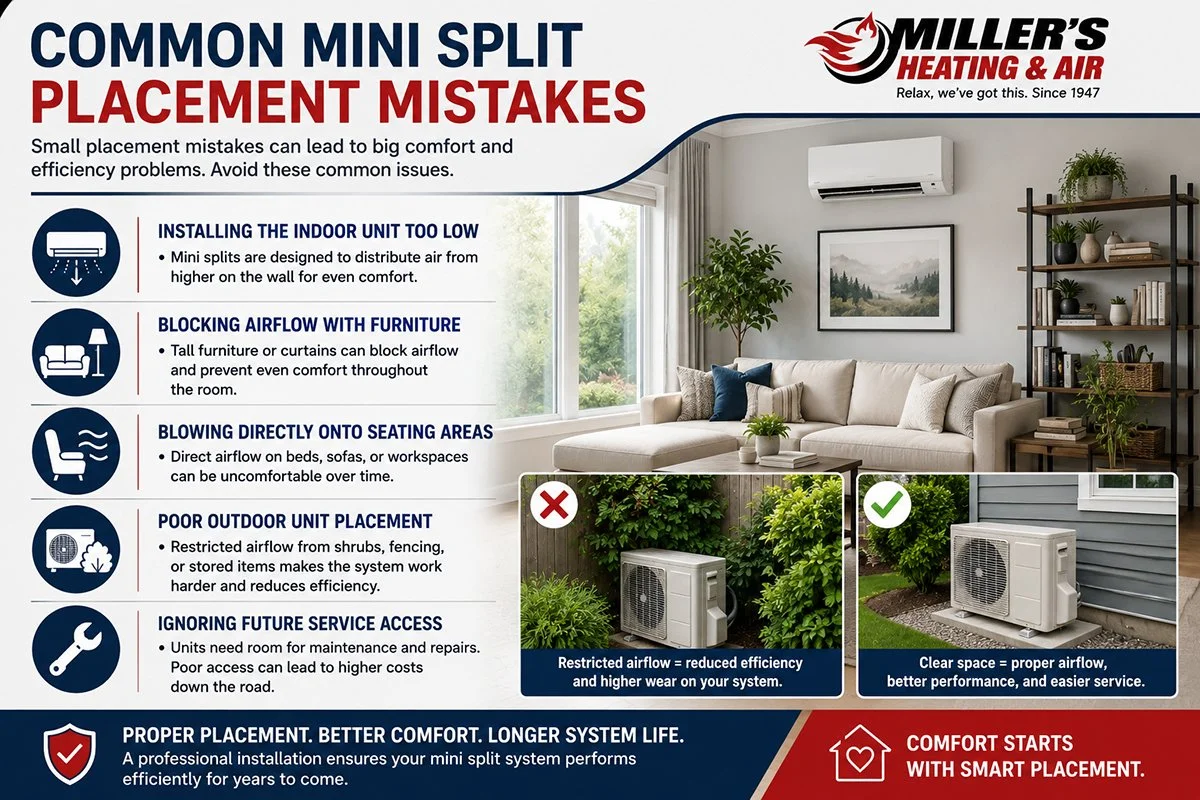
Avoid These Mini Split Placement Mistakes
Even the best ductless mini split heat pump won't perform as well as it should if it's installed in the wrong location. While every home is different, there are a few common placement mistakes that can reduce comfort, efficiency, and long-term reliability.
Installing the indoor unit too low. Mini splits are designed to distribute conditioned air from higher on the wall. Mounting the unit too low can reduce airflow and create uneven temperatures throughout the room.
Blocking airflow with furniture. Tall bookcases, cabinets, entertainment centers, or curtains can prevent conditioned air from circulating properly. The unit may cool the area immediately around it while leaving the rest of the room uncomfortable.
Blowing directly onto seating areas. Although mini splits are designed for comfort, homeowners often find it unpleasant when cool or warm air blows directly onto a bed, sofa, dining table, or home office workspace for long periods.
Poor outdoor unit placement. Installing the outdoor unit where airflow is restricted by shrubs, fencing, or stored items forces the system to work harder. The unit also needs enough clearance for future maintenance and repairs.
Ignoring future service access. Refrigerant lines, electrical components, filters, and drain connections all require periodic inspection. Choosing a location that makes servicing difficult can increase maintenance time and future repair costs.
A professional installation considers all of these factors before the first hole is drilled, helping ensure your system performs efficiently for years to come.
Single-Zone vs. Multi-Zone Systems
One of the first decisions homeowners make is whether they need a single-zone or multi-zone ductless system.
A single-zone ductless mini split air conditioner installation uses one outdoor unit connected to one indoor unit. These systems work well for individual spaces such as:
Home offices
Bedrooms
Finished garages
Bonus rooms
Home additions
Finished basements
If you're trying to heat and cool several rooms independently, however, a multi-zone system may be the better choice.
Multi-zone systems connect multiple indoor units to one outdoor unit, allowing different rooms to maintain different temperatures. This provides greater flexibility while improving comfort throughout the home.
The right choice depends on your home's layout, insulation, square footage, and how each space is used. During an in-home consultation, an HVAC professional can help determine whether one indoor unit is sufficient or whether multiple indoor units will provide better long-term comfort.

Why Professional Design Matters
Choosing the right equipment is only part of a successful installation. Proper system design is equally important.
Before recommending a ductless air conditioner installation, an experienced HVAC contractor should evaluate your home's layout, insulation levels, window placement, ceiling height, electrical capacity, and heating and cooling needs.
A professional installation also includes:
Proper equipment sizing
Heat load calculations
Indoor and outdoor unit placement
Refrigerant line routing
Condensate drainage
Electrical connections
Airflow optimization
These details directly affect comfort, efficiency, and equipment lifespan.
An improperly sized or poorly located system may still operate, but it may run longer, use more electricity, and struggle to maintain even temperatures throughout the home.
Professional planning helps ensure your ductless mini split performs the way it was designed while protecting your manufacturer's warranty and reducing the likelihood of future problems.
Frequently Asked Questions
Where is the best place to install a ductless mini split?
Most indoor units are installed high on a wall where air can circulate freely throughout the room. Avoid locations where furniture, curtains, or large objects block airflow or where the unit blows directly onto beds or seating areas.
Can one mini split cool more than one room?
It depends on the layout. A single indoor unit works best in open spaces. Homes with multiple enclosed rooms often benefit from a multi-zone system with several indoor units.
Does the outdoor unit need to be in the shade?
Not necessarily. Good airflow is more important than full shade. The outdoor unit should have plenty of clearance and remain free of leaves, shrubs, and other obstructions.
Can I install a mini split myself?
Most homeowners should leave installation to a licensed HVAC professional. Proper sizing, refrigerant charging, electrical work, condensate drainage, and equipment placement all play a major role in system performance and warranty protection.
How long does a ductless mini split last?
With professional installation and routine maintenance, many ductless mini split systems provide reliable heating and cooling for 15 to 20 years or more.
Ready to Install a Ductless Mini Split?
A ductless mini split can provide outstanding comfort and energy efficiency, but only if it's designed and installed correctly.
From choosing the right equipment to determining the ideal location for both the indoor and outdoor units, proper planning helps maximize performance while reducing future maintenance issues.
If you're considering a ductless mini split heat pump for your Vancouver-area home, the experienced team at Miller's Heating & Air can help you design a system that fits your home, comfort goals, and budget. We'll evaluate your space, answer your questions, and recommend the best installation options for long-term performance.
Schedule your consultation today and discover whether a ductless mini split is the right solution for your home.